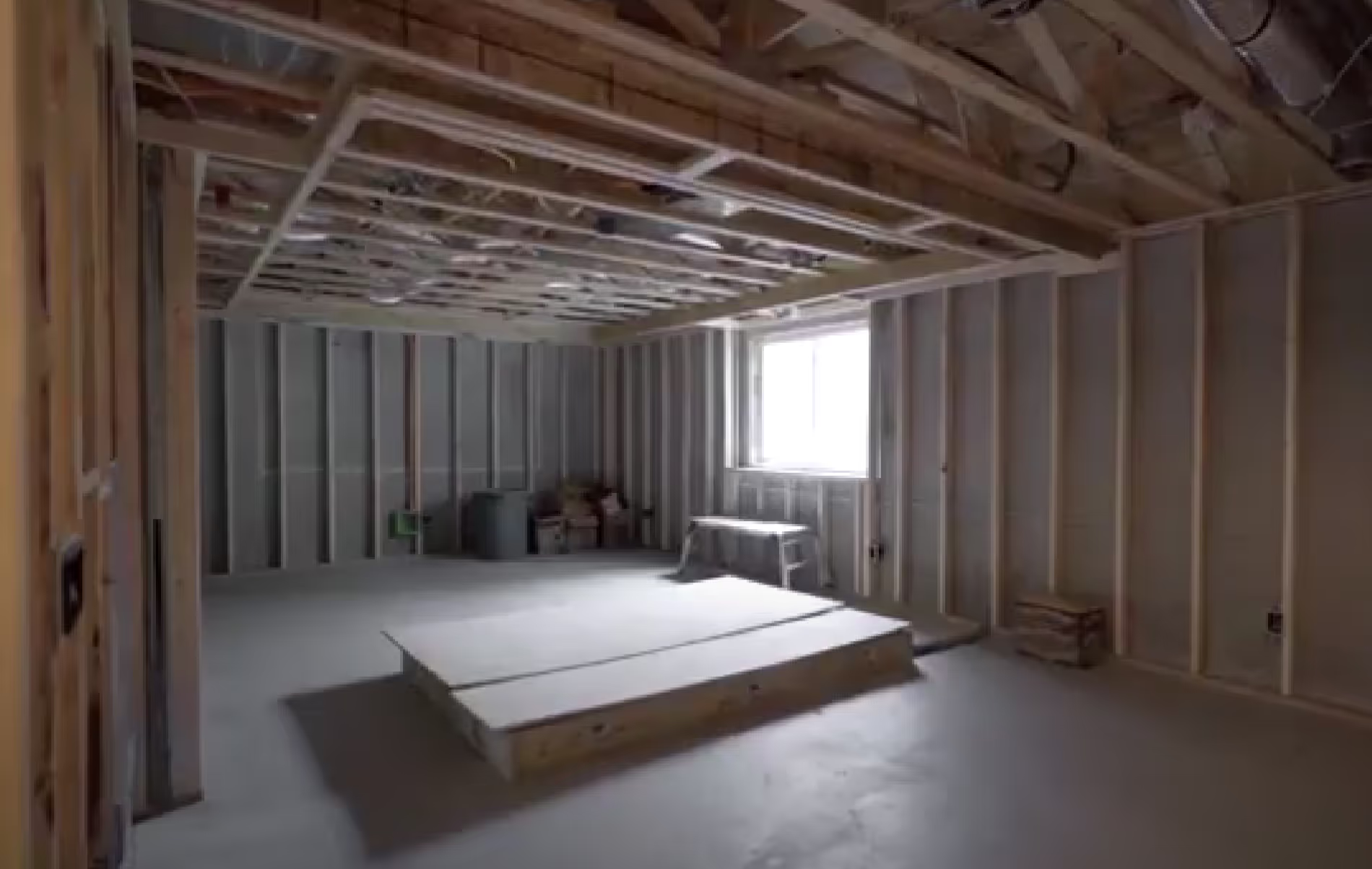
When building a home addition, consider these tips from the experts at Country Creek Builders.

You love your neighborhood. Your kids attend excellent schools, you're close to work, and your neighbors have become close friends over the years. But your home feels increasingly cramped—the kitchen barely accommodates your family during meals, you're desperate for a home office, and the kids are sharing a bedroom that should have been divided years ago.
Moving would solve the space problem, but it would also mean leaving everything you've built in this community. A home addition lets you stay exactly where you are while gaining the space you need. But which type of addition makes sense for your property?
You've heard terms like "bump-out," "building up," and "building out" without understanding what they mean or which approach works for your lot. Some neighbors built second stories; others extended their kitchens horizontally. Each project looked different, cost different amounts, and solved different problems.
After completing 586+ projects across Lakeville, Apple Valley, Prior Lake, and the South Metro—including hundreds of home additions—we've learned that choosing the right addition type starts with understanding your lot. Property dimensions, setback requirements, zoning regulations, and existing structure all determine which approaches are viable and which ones won't work no matter how much you want them.
This comprehensive guide explores the three primary addition types: bump-outs (small cantilever extensions), building up (second-story additions), and building out (horizontal additions on new foundations). We'll analyze costs, structural requirements, when each makes sense, and how Lakeville lot sizes and South Metro zoning regulations affect your options.
Before diving into specific approaches, understanding the fundamental differences between addition types clarifies your options.
Definition: Small extensions (typically 2-4 feet) projecting from existing exterior walls without requiring new foundations. The addition "bumps out" from your home, supported by cantilever framing extending from existing floor joists or wall structure.
Typical applications:
Size limitations: Most building codes limit cantilever projections to 4 feet maximum. Beyond that distance, you need foundation support making it a true "building out" addition rather than a bump-out.
Definition: Adding an entirely new floor above existing structure, typically converting single-story homes to two stories or expanding second floors on existing two-story homes.
Typical applications:
Structural requirements: Existing foundations and walls must support additional floor loads, often requiring reinforcement before adding upper levels.
Definition: New construction extending horizontally from existing homes, built on new foundations at ground level.
Typical applications:
Foundation requirements: Always require new foundations, footings, and complete structural systems independent of (but connected to) existing homes.
Bump-outs provide the most cost-effective way to add modest space where you need it most, particularly in kitchens and bathrooms where even 3 feet of additional depth creates dramatic functional improvements.
Cantilever construction extends floor joists or rafters beyond exterior walls, creating overhangs supporting additional space.
Structural components:
Floor cantilevers (for first-floor bump-outs):
Limitations: Floor joists can typically cantilever 1/3 their interior span. A room with 12-foot floor joists can safely cantilever 4 feet; rooms with 9-foot spans only 3 feet.
Roof cantilevers (for upper-level bump-outs):
Critical engineering: All cantilever additions require structural calculations ensuring existing floor systems can handle additional loads. Undersized joists need reinforcement before cantilever extensions are viable.
Bump-outs shine in specific scenarios where modest space gains solve significant problems.
Kitchen expansions ($25,000-$45,000):
Problem solved: Galley kitchens too narrow for islands; L-shaped kitchens lacking counter space; tight kitchens where adding 3 feet transforms functionality.
What 3-4 feet achieves:
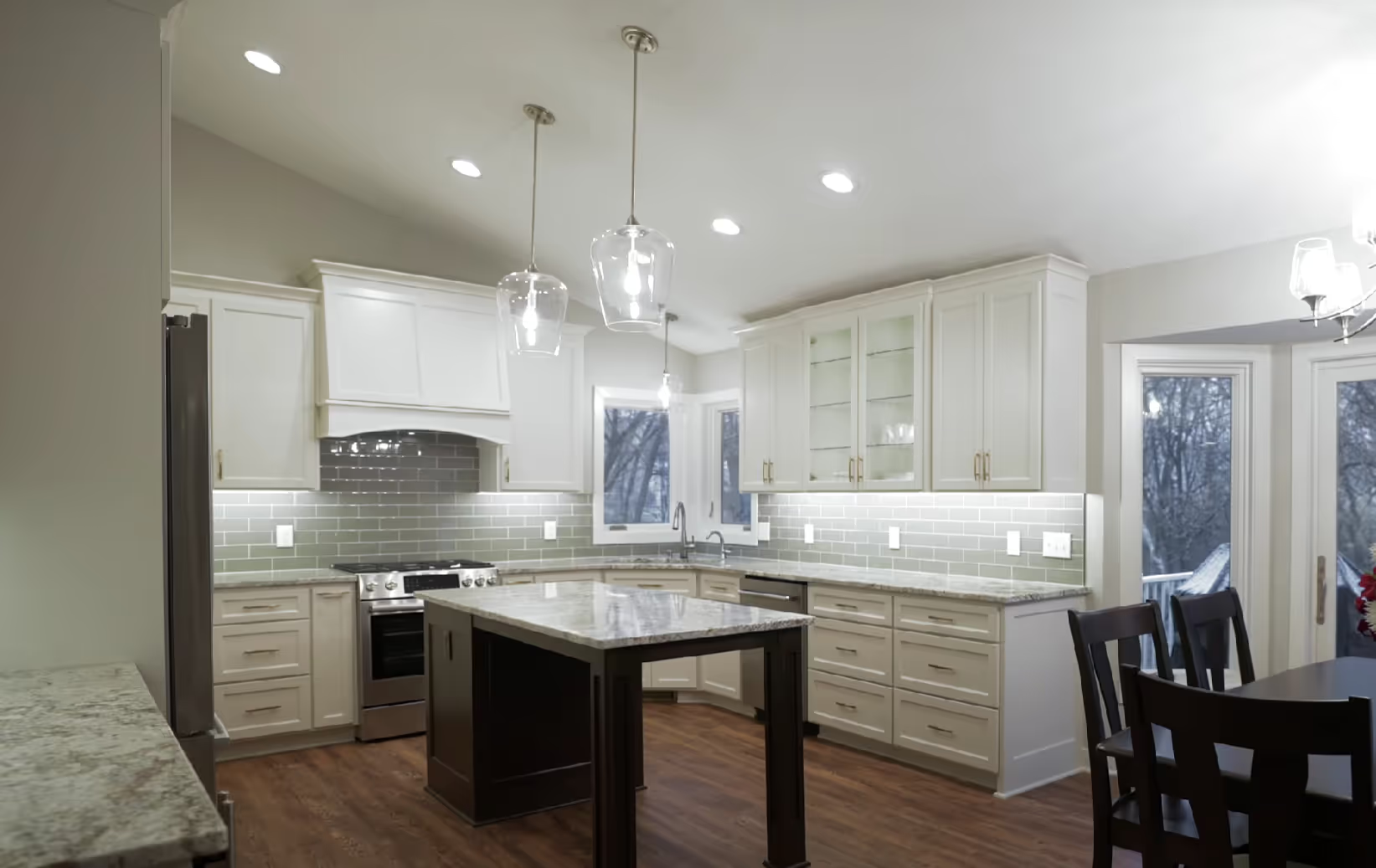
We've completed dozens of kitchen bump-outs in Lakeville and Apple Valley where adding 3-4 feet depth allowed installing islands that completely transformed kitchen functionality. One Prior Lake homeowner specifically told us, "Adding those 3.5 feet gave us the island we always wanted without the $150,000 cost of a full kitchen addition."
Bathroom enlargements ($20,000-$35,000):
Problem solved: Master bathrooms too small for double vanities; cramped three-quarter baths needing better layouts; powder rooms lacking adequate space.
What 3-4 feet achieves:
Bedroom extensions ($18,000-$30,000):
Problem solved: Master bedrooms lacking sitting areas; tight bedrooms needing more furniture space; rooms where windows limited bed placement.
What 3-4 feet achieves:
Dining room expansions ($22,000-$35,000):
Problem solved: Dining areas too small for desired table sizes; rooms where furniture touched walls; spaces lacking buffet or storage.
What 3-4 feet achieves:
Understanding complete bump-out costs prevents budget surprises.
Typical costs for 3-4 foot bump-outs (per linear foot of exterior wall):
Base structure ($250-$350/linear foot):
Kitchen bump-out (10-foot section, 3.5 feet deep):
Bathroom bump-out (8-foot section, 3.5 feet deep):
Bedroom bump-out (12-foot section, 4 feet deep):
Cost per square foot: $250-$400 depending on room type and finishing quality. Kitchens and bathrooms at higher end due to plumbing, cabinetry, and fixtures; bedrooms at lower end.
Lowest addition cost: Bump-outs cost 30-50% less than comparable building-out additions requiring foundations. Saving $10,000-$25,000 makes additions feasible when budgets are tight.
Minimal site disruption: No excavation, foundation work, or major landscaping disturbance. Installation proceeds quickly with most work occurring inside existing home envelope.
Faster project completion: Typical bump-outs complete in 2-4 weeks compared to 8-16 weeks for full additions. Less disruption to daily life and faster enjoyment of new space.
No setback concerns: Cantilevers typically don't trigger setback requirements since they're considered part of existing structure rather than new construction. However, check local codes—some municipalities apply setback rules to cantilevers.
Matching exterior easier: Smaller sections mean matching siding, roofing, and trim to existing finishes involves less material and usually achieves better aesthetic integration.
Preserve yard space: No foundation means no loss of outdoor space—your yard, landscaping, and outdoor features remain unchanged.
Size constraints: 4-foot maximum depth and relatively short lengths (8-12 feet typical) limit how much space bump-outs add. Total square footage gains typically 30-50 square feet—significant for functionality but modest compared to full additions.
Structural limitations: Existing floor systems must adequately support cantilevers. Homes with undersized joists, compromised structural members, or already-modified framing may not support cantilever additions without expensive reinforcement.
Not suitable for entire rooms: You can't bump-out an entire master suite, large kitchen expansion, or family room addition. Bump-outs enhance existing rooms rather than creating new ones.
Limited to single-story applications: While possible on upper floors, bump-outs typically apply to first-floor spaces. Second-floor cantilevers require more complex engineering and often cost nearly as much as full second-story additions.
Exterior appearance challenges: Poorly designed bump-outs create awkward exterior appearances, looking like afterthoughts rather than original design elements. Careful attention to roofline integration and exterior detailing prevents this problem.
Bump-outs work brilliantly in specific scenarios:
Budget-conscious homeowners needing functional improvements without $100,000+ addition costs. Spending $15,000-$30,000 for dramatic kitchen or bathroom improvements makes sense when full additions aren't feasible.
Homes on small lots where setbacks prohibit building-out additions. If you're 5 feet from property lines, you can't extend horizontally—but cantilevers may be permitted.
Quick solutions needed before life events (weddings, family gatherings, holidays). Three-week completion timelines allow finishing before important dates.
Functional enhancements rather than major space additions. When you love your home but need slightly more room in specific areas, bump-outs deliver targeted improvements.
Properties with excellent bones where existing layouts work well but individual rooms need modest expansions. Don't tear apart functional homes when bump-outs solve your problems.
At Country Creek Builders, we've completed bump-out additions across Lakeville, Apple Valley, and the South Metro that transformed kitchens, bathrooms, and bedrooms for 30-50% less than full addition costs. When they're the right solution, they're remarkably effective.
Second-story additions maximize lot utilization by expanding vertically rather than horizontally—ideal for small lots where ground-level expansion isn't possible.
Adding second floors requires existing first-floor walls and foundations to support additional loads.
Structural assessment requirements:
Foundation evaluation:
First-floor wall capacity:
Connection details:
Professional engineering required: Building codes mandate structural engineering calculations for second-story additions. Engineers specify required reinforcement, connection details, and any foundation upgrades needed.
Full second-floor additions ($180,000-$350,000+):
Adding complete second stories to ranch homes, effectively doubling living space.
Project scope:
Timeline: 20-32 weeks from permits to completion
Partial second-story additions ($80,000-$180,000):
Adding rooms above portions of existing homes, typically above garages or one section of the first floor.
Project scope:
Timeline: 16-24 weeks from permits to completion
Pop-up additions ($60,000-$120,000):
Raising existing second-floor roof to create full-height ceilings and usable space.
Project scope:
Timeline: 12-18 weeks from permits to completion
Maximum lot utilization: Vertical expansion preserves yard space and outdoor areas. Perfect for Lakeville homes on quarter-acre lots where horizontal expansion would consume most outdoor space.
No setback issues: Building vertically doesn't affect setbacks from property lines. If you're too close to neighbors for ground-level additions, building up may be your only option.
Dramatic space gains: Full second-story additions double home size, adding 1,200-2,000 square feet. This transforms 1,500 sq ft ranches into 3,000 sq ft two-story homes.
Bedroom additions above noisy spaces: Adding bedrooms above garages separates sleeping areas from first-floor activity, providing privacy and noise isolation.
Views: Second-story rooms often offer better views, natural light, and privacy than ground-level additions.
Increased home value: Adding entire floors significantly increases property values, often approaching 80-90% cost recovery at resale—better than ground-level additions in many markets.
Highest cost per square foot: $200-$350/sq ft typical—more expensive than ground-level additions ($150-$280/sq ft) due to structural reinforcement, temporary housing during roof removal, and complexity.
Foundation reinforcement costs: Many homes need foundation upgrades ($10,000-$40,000+) before supporting second stories. Older South Metro homes with shallow footings often require underpinning or foundation replacement in worst cases.
Living during construction: Removing roofs creates major disruption. Most families temporarily relocate during critical phases (1-2 weeks minimum when home lacks roof).
Roof complexity: Matching new rooflines to existing architecture challenges designers and builders. Poor integration creates awkward appearances reducing home values.
Staircase requirements: Adding second floors means installing staircases consuming 40-60 sq ft of first-floor space. Existing floor plans may not accommodate stairs without sacrificing rooms or creating awkward layouts.
HVAC modifications: Heating and cooling systems sized for single-story homes can't handle doubled square footage. Expect $8,000-$20,000 HVAC upgrades.
Longer timelines: Second-story additions take 16-32 weeks vs. 8-16 weeks for ground-level work. Extended construction means extended disruption and holding costs.
Understanding complete costs including hidden expenses:
Full second-story addition (1,500 sq ft):
Master suite above garage (400 sq ft):
Small lots with setback restrictions: When property lines prevent horizontal expansion, vertical addition may be your only option. Common in older Lakeville neighborhoods with small lots.
Homes with unusable attics: Properties with attic spaces ripe for conversion—add a few feet of height and finish what's already there rather than building from scratch.
Ranch homes needing significant space: Converting 1,200 sq ft ranches to 2,400 sq ft two-stories transforms livability dramatically.
Above-garage opportunities: Garages provide pre-existing foundations and roof structures, reducing second-story addition costs compared to additions over living spaces.
Preserving yards and landscaping: When you've invested heavily in outdoor spaces, landscaping, pools, or patios and don't want to sacrifice any outdoor area.
Properties with excellent views: Second-story bedrooms or master suites offering lake views, downtown skylines, or natural vistas justify vertical expansion costs.
Neighborhoods where two-story homes dominate: In areas where most homes have two stories, adding a second floor brings your property to neighborhood standards, supporting better resale values.
Ground-level additions remain the most common approach, offering design flexibility and straightforward construction at reasonable costs.
Horizontal additions sit on independent foundations connecting to existing homes at multiple points.
Foundation requirements:
Footing depth: Must extend below frost line (42-48 inches in Minnesota) preventing frost heave and settling.
Foundation walls:
Connection to existing foundation:
Floor systems:
Kitchen and great room additions ($90,000-$200,000):
Expanding kitchens into great rooms, adding islands, pantries, and open layouts connecting to family rooms.
Typical scope (400-600 sq ft):
Master suite additions ($120,000-$220,000):
Creating main-floor master suites with bedrooms, walk-in closets, and luxury bathrooms.
Typical scope (500-700 sq ft):
Family room additions ($75,000-$150,000):
Adding casual living spaces, home offices, or multi-purpose rooms.
Typical scope (300-500 sq ft):
Four-season porch additions ($60,000-$120,000):
Creating year-round sunrooms or enclosed porch spaces.
Typical scope (250-400 sq ft):
Design flexibility: Ground-level additions accommodate any room type, size, or configuration. Want a 600 sq ft master suite? No problem. Need 800 sq ft of combined kitchen and family room? Easy.
No structural reinforcement: New foundations carry all loads independently—existing home structure doesn't need reinforcement (unless removing load-bearing walls during connection).
Moderate costs per square foot: $150-$280/sq ft typical—more affordable than building up and often less than major kitchen or bathroom remodels on a per-square-foot basis.
Easier HVAC extension: Ductwork extends through walls or crawlspaces rather than through multiple floor levels, simplifying installation and reducing costs.
Livable during construction: Most work occurs outside existing home envelope. Families continue normal routines until connection phases.
Main-floor accessibility: Adding bedrooms, bathrooms, or living spaces on main floors creates single-level living—increasingly valuable as homeowners age.
Straightforward engineering: Building out involves simpler structural calculations than building up. Standard construction techniques apply without extensive existing-structure evaluation.
Lot size requirements: Additions must respect setbacks from property lines. Typical South Metro requirements:
Small lots may lack space for desired additions while meeting setback requirements.
Yard sacrifice: Every square foot of addition consumes yard space. Large additions significantly reduce outdoor areas, affecting property enjoyment and resale appeal.
Excavation and site work: Foundation work requires excavation, potentially damaging landscaping, sprinkler systems, or existing features. Restoration adds $3,000-$10,000+ to budgets.
Longer timelines: Foundation work requires good weather and time for concrete curing. Projects take 12-20 weeks typical vs. 2-4 weeks for bump-outs.
Matching architecture: Blending new additions with existing homes challenges designers. Poor integration creates obvious add-on appearances rather than cohesive design.
Roof tie-ins: Connecting new roofs to existing structures requires careful flashing, valley creation, and weatherproofing. Improper details cause leaks.
Complete cost understanding for budgeting:
Master suite addition (550 sq ft: 300 sq ft bedroom, 100 sq ft closet, 150 sq ft bathroom):
Kitchen addition (400 sq ft expanded kitchen/great room):
Family room addition (350 sq ft):
Adequate lot sizes: Properties with sufficient space from setbacks allowing desired addition sizes. Typical Lakeville residential lots (1/4 to 1/2 acre) often accommodate building out.
Main-floor needs: When desired additions (master suites, kitchens, family rooms) function better on main floors than upper levels.
Normal structural conditions: Homes with standard foundations and framing not requiring special reinforcement.
Design flexibility priorities: When you want complete control over layouts, sizes, and configurations rather than working within structural constraints of existing spaces.
Aging-in-place considerations: Main-floor additions support single-level living as homeowners age, increasing long-term livability.
Moderate budgets: Building out costs less per square foot than building up, making it accessible for more homeowners.
At Country Creek Builders, approximately 70% of our home addition projects involve building out rather than bump-outs or second stories. The combination of design flexibility, reasonable costs, and straightforward construction makes horizontal additions the default choice for most South Metro homeowners.
Understanding typical lot dimensions helps determine which addition types are viable for your property.
Lakeville:
Apple Valley:
Prior Lake:
Rosemount:
Savage:
Small lots (8,000-10,000 sq ft):
Medium lots (10,000-15,000 sq ft):
Large lots (15,000+ sq ft):
Step 1: Measure lot dimensions
Step 2: Determine setback requirements
Step 3: Map existing structures
Step 4: Calculate buildable area
Example calculation (Lakeville residential lot):
This calculation shows theoretical maximum—practical additions are typically smaller to maintain yard space, access, and aesthetics.
South Metro municipalities regulate additions through zoning codes establishing building limitations.
Residential setbacks (varies by zoning district):
R-1 Single Family (most common):
R-2 Single Family (smaller lots):
Height restrictions:
Additional requirements:
Standard residential setbacks:
Height restrictions:
Residential setbacks (non-lakefront):
Lakefront properties (more restrictive):
Height restrictions:
Residential setbacks:
Height restrictions:
When setback variances are needed:
Variance process:
Variance criteria (must demonstrate):
Timeline: 6-12 weeks typical for variance approval
Costs: $400-$1,000 application fees plus potential $2,000-$5,000 for surveys, professional drawings, and consultants
Success rates: Vary significantly. Reasonable requests with neighbor support often succeed; questionable requests face opposition.
At Country Creek Builders, we evaluate setback compliance during initial consultations, identifying potential issues before homeowners invest in design work. Our experience across 586+ projects means we know which variance requests succeed and which face challenges.
With understanding of all three approaches, apply this framework for confident decisions.
Measure available space:
Evaluate limitations:
Identify required spaces:
Calculate total square footage:
For building up:
For building out:
For bump-outs:
Calculate complete costs for each viable option including:
Direct construction costs:
Indirect costs:
Opportunity costs:
Resale value impact:
Future flexibility:
Personal use timeline:
With lot constraints, space needs, structural feasibility, costs, and long-term implications considered, your optimal choice becomes clear.
Decision matrix examples:
Scenario 1: 9,000 sq ft Lakeville lot, need 600 sq ft master suite, moderate budget ($150,000), structural evaluation shows good foundation.Recommendation: Building up if garage allows master suite above; otherwise reduce scope to 400 sq ft bump-out or small building-out addition.
Scenario 2: 14,000 sq ft Apple Valley lot, need 450 sq ft kitchen expansion, good budget ($180,000), standard structural conditions.Recommendation: Building out. Ample lot space, kitchen works better on main floor, straightforward construction.
Scenario 3: 11,000 sq ft Prior Lake lot, need 3-4 feet more kitchen depth, tight budget ($35,000), good structural conditions.Recommendation: Bump-out. Modest needs, limited budget, quick solution.
Scenario 4: 18,000 sq ft Rosemount lot, need entire second floor with 3 bedrooms, bathrooms, playroom (1,400 sq ft), structural evaluation shows foundation needs $25,000 upgrades.Recommendation: Building up. Large lot but building out 1,400 sq ft would consume too much yard. Accept foundation costs as part of dramatic space gain.
Yes, and it often makes financial sense. Excavating for foundations anyway means adding basement space costs only $15,000-$30,000 more (essentially finishing costs). However, building codes require basement spaces in additions to be finished immediately or isolated from existing basements.
Most municipalities don't apply setback rules to cantilevers since they're technically extensions of existing structure rather than new construction. However, some jurisdictions limit cantilevered projections to 3-4 feet. Always verify with your building department.
Properly engineered second-story additions don't damage foundations when required reinforcement is completed first. Skipping engineering or ignoring reinforcement recommendations creates serious problems. Always hire licensed structural engineers for evaluations.
No absolute minimum exists, but practical constraints emerge. Lots under 8,000 sq ft rarely accommodate building-out additions larger than 200-300 sq ft while meeting setbacks and preserving some yard. Very small lots (6,000 sq ft or less) typically require building up or bump-outs only.
Yes, and it's one of the most cost-effective second-story additions. Garages have foundations already and single-story roof structures easy to modify. Adding 400-600 sq ft above garages typically costs $80,000-$140,000—substantially less than building up over living spaces.
Timelines vary with weather, permit approval speed, and project complexity.
Minnesota allows licensed contractors to design many residential additions without architects. However, complex projects (second-story additions, large additions, unusual structures) benefit from architect involvement. Structural engineering is required regardless of who creates designs.
Budget $3,000-$8,000 for standard restoration (grading, sod, basic landscaping replacement) and $8,000-$20,000+ for extensive restoration (mature trees, irrigation systems, retaining walls, elaborate landscaping). Set aside 5-10% of addition budget for site restoration.
Your home addition decision affects your family's comfort, property value, and financial position for years. The right choice aligns with your lot, budget, and goals.
Here's your action plan:
Step 1: Measure your lot and identify setback requirements from your municipality (Lakeville, Apple Valley, Prior Lake, Rosemount, or other South Metro city)
Step 2: Calculate available building space for horizontal additions given setback constraints
Step 3: Define your space needs clearly—specific rooms, sizes, and must-have features
Step 4: Contact experienced addition contractors for lot evaluations and structural assessments determining which addition types are viable
Step 5: Request cost estimates for each viable option including all direct and indirect expenses
Step 6: Compare options against decision framework, considering costs, lot impact, timeline, and long-term value
Step 7: Make your decision based on comprehensive analysis rather than assumptions or incomplete information
At Country Creek Builders, we've completed hundreds of additions across the South Metro including bump-outs, second-story additions, and building-out projects. Our 25+ years of experience means we know which addition types work for different properties, how South Metro zoning affects options, and how to maximize value regardless of which approach makes sense for your situation.
We'll visit your property, assess your lot, evaluate structural conditions, explain which options are feasible, and provide accurate cost estimates for comparison. Our systematic addition process ensures you make informed decisions supported by facts rather than guesses.
Ready to determine which addition type works for your Lakeville, Apple Valley, Prior Lake, or South Metro property? Contact us for a no-pressure consultation where we'll evaluate your lot, discuss your goals, and show you exactly which approaches make sense for your specific situation.
Because the right addition isn't just about adding space—it's about choosing the approach that works with your lot, serves your needs, and supports your investment.
We're based out of the South Metro Twin Cities, and we serve both