If you're looking to remodel your kitchen. consider these tips for how to hire a kitchen contractor.
Choosing a kitchen remodeling contractor in Prior Lake might be one of the most important decisions you make for your home. The contractor you select determines whether your project delivers the dream kitchen you've envisioned or becomes a nightmare of delays, budget overruns, and disappointing results.
Home improvement contractors consistently rank among the most complained-about industries in America. Stories of contractors who disappear mid-project, blow through budgets, deliver poor craftsmanship, or drag out timelines indefinitely are unfortunately common. But understanding what separates quality contractors from those who cause headaches helps you make confident decisions.
As a remodeling contractor serving Prior Lake, Lakeville, Apple Valley, and the South Metro since 2000, we've witnessed countless homeowners make both wise and costly contractor choices. This comprehensive guide shares the critical factors to evaluate when selecting your kitchen remodeling partner.
Before diving into evaluation criteria, understand what's at stake when choosing a kitchen remodeling contractor:
The worst-case scenario: Your contractor takes your money, starts work, then can't finish. Amateur, dishonest, or poorly-managed contractors sometimes underbid projects, mismanage funds, or lack the skills to complete what they've started. Homeowners end up with torn-apart kitchens, depleted budgets, and no clear path to completion.
Many contractors underbid projects intentionally, planning to increase costs through change orders once you're committed. Others simply lack the experience to accurately estimate projects, leading to "surprises" that balloon your budget by 30-50% or more.
Contractors who can't provide clear schedules or stick to commitments turn 6-week projects into 4-month ordeals. Poor scheduling, unreliable subcontractors, and lack of project management expertise create extended periods of disruption to your daily life.
Even when construction finishes on time and on budget, poor design leadership creates lasting disappointment. Contractors who simply build whatever you ask without providing expert guidance leave you living with regrets about layout, materials, or functionality choices you made without understanding the implications.
Shoddy workmanship requires expensive corrections and creates ongoing frustration. Cabinets that don't align properly, countertops with visible seams, tiles with inconsistent grout lines, or plumbing that leaks within months all stem from poor craftsmanship during installation.
The single most important factor when choosing a kitchen remodeling contractor is whether they offer in-house design services.
When you hire a contractor to build a kitchen designed by a separate designer, communication breakdowns inevitably occur. The contractor encounters issues the designer didn't anticipate. The designer takes days to respond with solutions. Changes require new quotes. Your timeline stretches and costs increase.
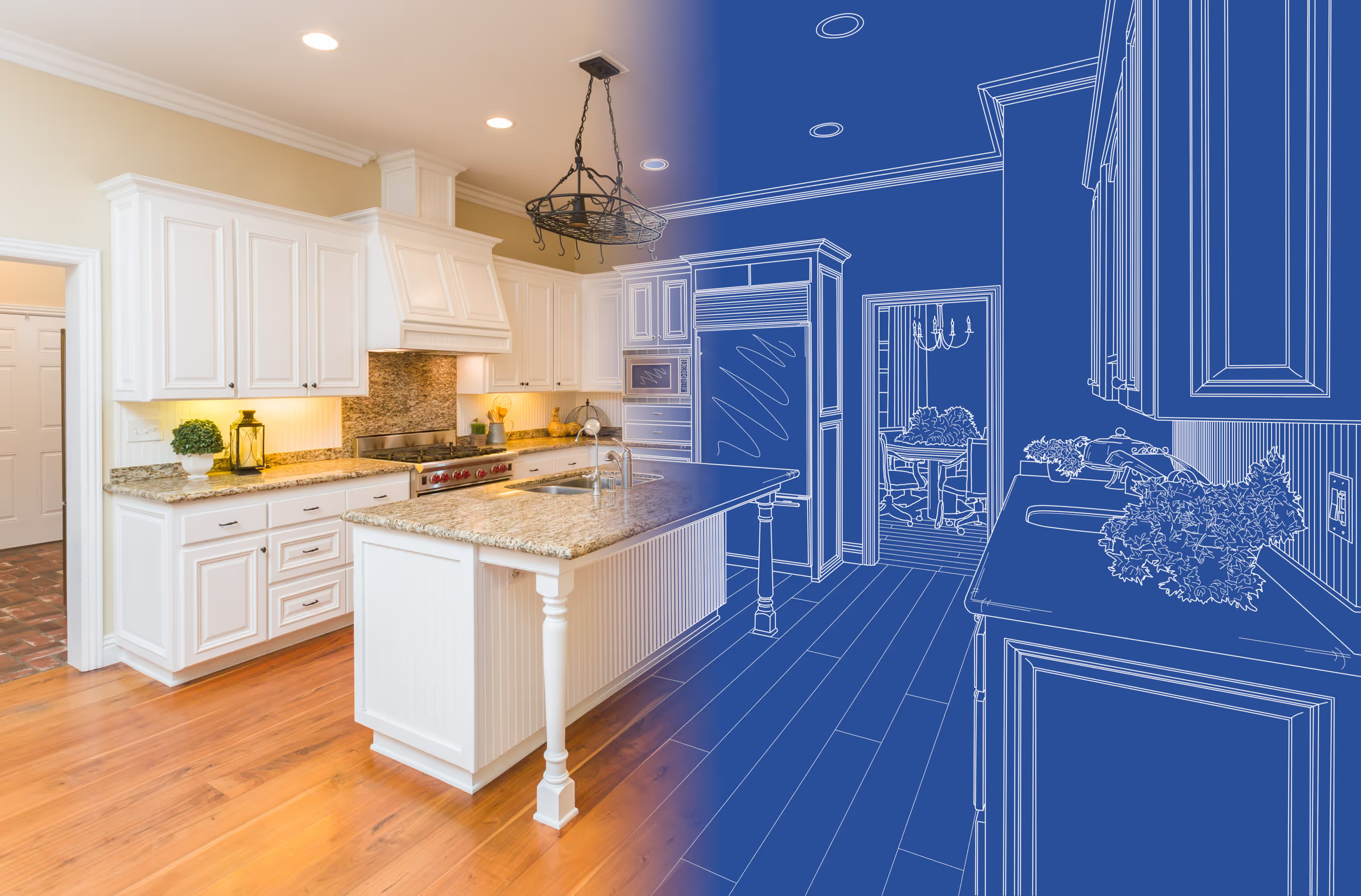
Design-build contractors integrate design and construction under one roof. Their designers work directly with their construction team. When questions arise during building, answers come immediately from the same company responsible for both design and execution.
Design-build contractors provide accurate quotes because they've designed everything before estimating costs. There are no surprises about what's required to build the design because the team that created it is the same team building it.
Traditional contractors working from someone else's design must guess at requirements and conditions. These guesses lead to the "unforeseen circumstances" and "change orders" that blow up budgets.
"Do you have in-house designers on staff?" Not builders who dabble in design, but actual trained design professionals.
"Will I see detailed renderings or 3D visualizations before signing a contract?" You should see exactly what you're getting before committing.
"Do design and construction operate as one contract or separate agreements?" One contract means one point of accountability. Separate agreements allow finger-pointing when problems arise.
"How many design meetings are included in your process?" Multiple consultations ensure your vision gets captured correctly.
"Will the designer and builder communicate directly during construction?" This direct communication prevents delays when questions arise.
How contractors staff their projects dramatically affects quality, accountability, and reliability.
Many contractors function as general contractors, hiring subcontractors for all actual work. They coordinate various trades but don't employ the craftsmen building your kitchen. This model creates several problems:
Accountability Issues: When something goes wrong, general contractors blame subcontractors. Subcontractors blame the general contractor. You're stuck in the middle trying to get someone to fix the problem.
Quality Inconsistency: Subcontractors juggle multiple jobs simultaneously. Your project competes for attention with their other commitments. Quality and timeline suffer when you're not their priority.
Scheduling Unreliability: Subcontractors arrive when they can fit you into their schedule, not when your project timeline requires. Delays cascade as each trade waits for the previous one.
Contractors with full-time employees maintain better control over quality, scheduling, and accountability. Their craftsmen work exclusively on company projects with consistent quality standards and clear priorities.
"Do you use full-time employees or subcontractors?" This straightforward question reveals their staffing model.
"Who will actually be working in my home?" Get specific names and backgrounds of craftsmen assigned to your project.
"How do you ensure quality control during construction?" Full-time employees receive consistent training and oversight. Subcontractors vary widely in skill and attention to quality.
"What happens if I'm unhappy with a specific craftsman's work?" Understanding their accountability mechanisms reveals how much control they actually have.
Minnesota requires residential contractors to hold licenses from the Department of Labor and Industry. Licensed contractors protect you from liability and ensure proper permitting and code compliance.
Licensed contractors demonstrate they meet minimum competency standards and carry required insurance. They understand Minnesota building codes and local permitting requirements. Most importantly, licensing provides recourse if problems arise.
Unlicensed contractors may seem cheaper initially, but they create major risks. If they perform unpermitted work, you're liable for code violations. If they're injured on your property without proper insurance, you could face liability. When it's time to sell your home, unpermitted work must be disclosed and corrected.
Professional contractors pull their own permits and coordinate all inspections. They know exactly what permits your kitchen remodel in Prior Lake requires and handle the entire process.
Contractors who suggest skipping permits to "save time" or "reduce costs" put you at serious risk. Never work with contractors who won't pull proper permits.
"Can you provide your Minnesota contractor license number?" Verify the number through the Minnesota Department of Labor and Industry.
"What insurance coverage do you carry?" Look for general liability and workers' compensation coverage. Ask for certificates of insurance.
"Will you pull all necessary permits for this project?" The answer should be an unqualified yes with details about what permits are required.
"Who coordinates inspections?" The contractor should handle all inspection scheduling and ensure work passes on first inspection.
Years in business and project volume provide important context about contractor capability.
Contractors with 10+ years and hundreds of completed projects have encountered and solved virtually every challenge that arises in kitchen remodeling. They anticipate problems before they occur, maintain relationships with reliable suppliers, and systematize processes that keep projects on track.
Newer contractors or those with limited project volume rely on you to be their learning experience. You don't want to pay for them to learn lessons more experienced contractors already know.
Contractors serving Prior Lake, Lakeville, and the South Metro for decades understand local building departments, inspection processes, and market conditions. They know which permits specific municipalities require, how long approvals take, and what building officials expect to see.
Local contractors also build reputations in their communities. They can't disappear or deliver poor work because their reputation determines their future business.
"How long have you been in business?" Look for contractors with 10+ years of continuous operation.
"How many kitchen remodeling projects do you complete annually?" Higher volume indicates systematic processes and consistent demand.
"Can you show me examples of recent projects similar to mine?" Photos and details of comparable projects demonstrate relevant experience.
"What areas do you primarily serve?" Local focus indicates community investment and accountability.
How contractors communicate during your project dramatically affects your experience and stress level.
Before your project starts, establish:
Quality contractors proactively communicate progress, potential issues, and schedule changes. They don't wait for you to chase them down for updates.
Professional contractors use systematic project management processes:
Contractors who manage projects casually without systems inevitably fall behind schedule and miss details.
"Who will be my primary contact throughout the project?" Get a specific name and direct contact information.
"How often will I receive project updates?" Look for proactive communication, not reactive responses only when you ask.
"What happens if I need to reach you outside business hours?" Emergencies don't follow 9-to-5 schedules.
"Can you walk me through your typical project timeline?" Detailed timelines demonstrate systematic planning.
"How do you document decisions and changes?" Written documentation prevents misunderstandings.
Nothing predicts future performance better than past performance. Contractor reviews and reputation provide invaluable insight into what working with them actually entails.
Don't just check star ratings. Read actual review content looking for:
Process Comments: Do reviews mention contractors being on time, clean, and communicative? Or do they complain about delays, mess, and poor communication?
Outcome Comments: Are customers happy with finished results? Do they mention quality craftsmanship and attention to detail?
Problem Resolution: When issues arose, how did the contractor handle them? Accountability and problem-solving matter more than perfection.
Budget and Timeline Accuracy: Do reviews confirm projects stayed on budget and schedule? Or do they warn about surprise costs and extended timelines?
Google Reviews: Look for 4.5+ star ratings with 50+ reviews. Read recent reviews and the contractor's responses to any negative feedback.
Better Business Bureau: Check for complaints and how they were resolved. Accreditation indicates commitment to ethical business practices.
Industry Associations: Membership in professional organizations like NARI (National Association of the Remodeling Industry) demonstrates commitment to industry standards.
Referrals: Ask the contractor for references from recent projects similar to yours. Actually call these references and ask specific questions about their experience.
"Can you provide references from recent kitchen remodeling clients?" Get at least 3-5 references and contact them all.
"What's your approach to handling customer concerns during projects?" Their answer reveals commitment to customer satisfaction.
"Are you willing to show me reviews that specifically mention on-time completion?" This confirms schedule reliability.
How contractors price projects and structure payments reveals their professionalism and financial stability.
Professional contractors provide detailed quotes breaking down:
Vague estimates with lump sums and unclear allowances hide costs that will emerge later as "change orders."
Large Upfront Payments: Never pay more than 10-15% upfront. Large initial payments before work begins indicate potential cash flow problems.
Unbalanced Payment Schedules: Payments should align with work completed. If you're paying 70% when only 40% of work is done, the contractor has your money and less incentive to finish promptly.
Payment Before Permits: Don't make substantial payments before permits are secured. Some contractors collect money, then discover they can't get permits for what they've sold.
Cash-Only Requests: Contractors requesting cash payments raise serious red flags about legitimacy and tax compliance.
"Is this a fixed quote or an estimate?" Fixed quotes lock in pricing. Estimates allow upward adjustments.
"What's included in the price and what would be extra?" Get specifics about every aspect of the project.
"How do you handle unforeseen conditions?" Their contingency approach reveals whether they've planned for common surprises.
"What's your payment schedule?" Payments should align with project milestones, never front-loaded.
"What payment methods do you accept?" Credit cards provide payment protection. Checks create paper trails. Cash-only is suspicious.
What happens after your kitchen is complete reveals contractor commitment to quality and customer satisfaction.
Quality contractors stand behind their work with written warranties covering:
Verbal warranties mean nothing. Get everything in writing.
Even with excellent work, questions sometimes arise after project completion. Professional contractors remain accessible and responsive:
"What warranty do you provide on your workmanship?" Get specific duration and coverage details in writing.
"How do I reach you if issues arise after project completion?" Test their responsiveness before committing.
"Can you show me examples of how you've handled warranty claims?" Their track record reveals actual commitment vs. empty promises.
After 25+ years and 586+ completed projects throughout the South Metro, we've refined our approach to address every factor quality-conscious homeowners should evaluate:
In-House Design Services: Our design team works directly with our construction team, eliminating communication gaps and enabling iron-clad quotes.
Full-Time Employees: We don't use subcontractors. Our craftsmen work exclusively on Country Creek projects with consistent quality standards and clear accountability.
Licensed and Insured: We maintain all required Minnesota licenses and handle all permitting and inspections.
Deep Local Experience: We've been transforming kitchens in Prior Lake, Lakeville, Apple Valley, and surrounding communities since 2000.
Systematic Communication: We provide regular updates, stick to schedules, and show up on time every day your project is active.
Proven Reputation: Hundreds of five-star reviews from satisfied homeowners confirm we deliver on our commitments.
Transparent Pricing: Iron-clad quotes based on complete designs mean no surprise costs or budget overruns.
Complete Accountability: If something goes wrong, we own it and fix it. No finger-pointing or excuses.
Watch for these contractor red flags that should end your evaluation immediately:
No Fixed Address: Contractors working from P.O. boxes or providing only cell phone numbers lack business permanence.
Pressure to Sign Immediately: Quality contractors don't need high-pressure sales tactics. Take time to evaluate options.
Unusually Low Bids: If one bid is dramatically lower than others, something's wrong. They've either missed major requirements or plan to add costs through change orders.
No References or Poor Reviews: Every established contractor should provide multiple recent references. Refusing to do so or having predominantly negative reviews reveals problems.
Unlicensed or Uninsured: Never work with unlicensed contractors or those without proper insurance regardless of their price.
Suggesting Permit Skipping: Contractors who recommend avoiding permits to "save money" create serious legal and financial risks.
Large Upfront Payments: Substantial deposits before work begins indicate potential cash flow issues.
Vague Contracts: Contracts should detail exactly what work is included, what materials will be used, the timeline, and payment schedule. Vague contracts enable disputes.
After evaluating multiple contractors, use these criteria for final selection:
Beyond checking boxes on evaluation criteria, trust your gut feeling about working with each contractor. You'll interact regularly throughout your project. Choose someone you genuinely feel comfortable with and confident in.
Don't choose based on price alone. Compare:
The lowest bid often becomes the most expensive option when change orders, delays, and quality issues multiply.
Get detailed written proposals from your top candidates covering:
Written proposals enable accurate comparison and prevent misunderstandings.
Choosing the right kitchen remodeling contractor makes the difference between a dream kitchen that enhances your life for decades and a nightmare experience that drains your budget and patience.
At Country Creek Builders, we've spent 25+ years earning the trust of South Metro homeowners by delivering on our commitments. Our systematic design-build approach, full-time craftsmen, and complete accountability eliminate the uncertainty and risk that plague typical contractor relationships.
Ready to work with a contractor who actually does what they say they'll do? Schedule a no-pressure consultation where we'll listen to your vision, assess your space, and show you exactly how our process delivers beautiful kitchens on time and on budget.
Contact Country Creek Builders today to begin transforming your Prior Lake kitchen with confidence.
Planning other home improvements? Explore our comprehensive guides on bathroom remodeling, basement finishing, and home additions throughout the South Metro.
We're based out of the South Metro Twin Cities, and we serve both