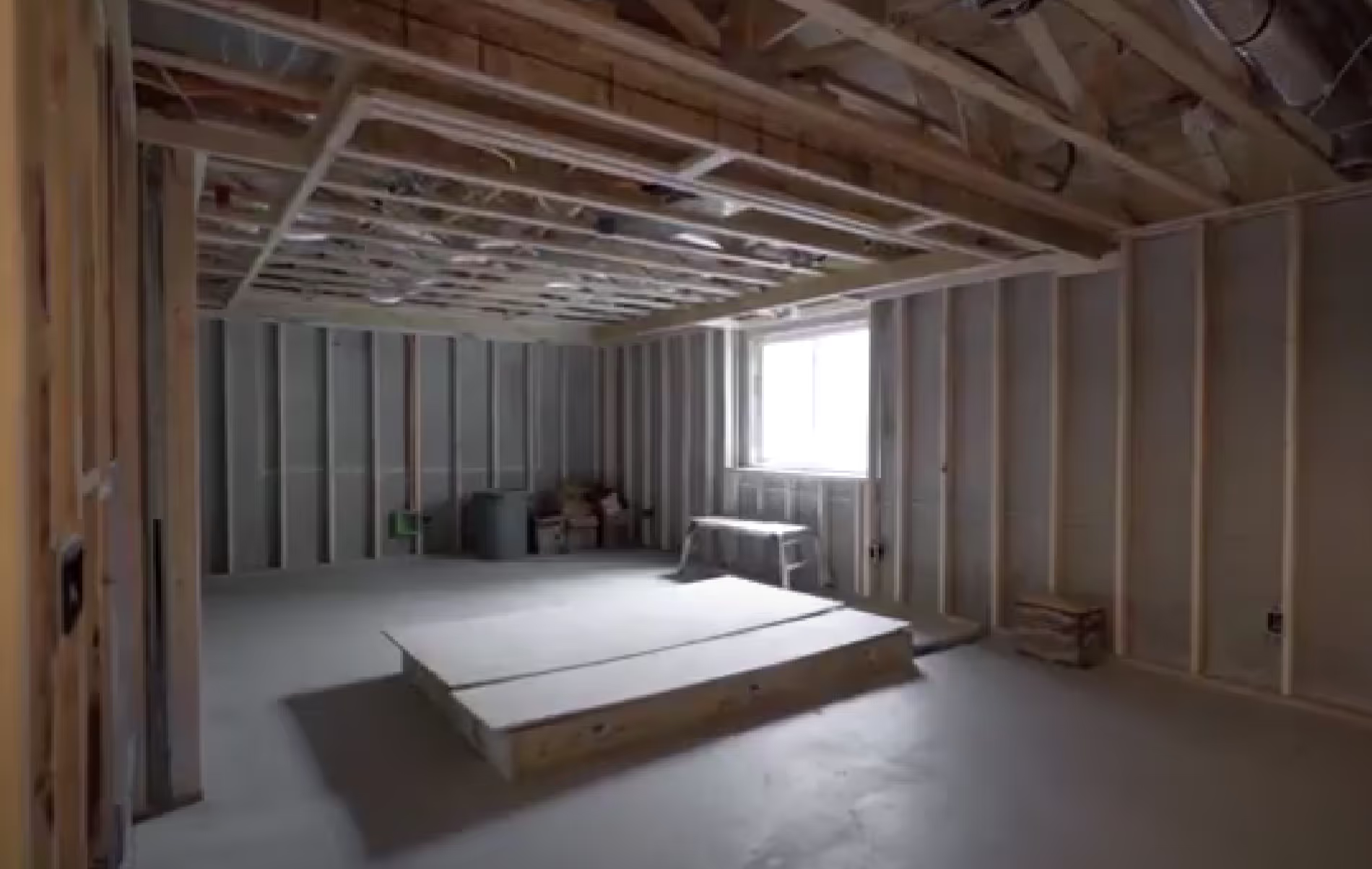
When deciding between a home addition or a basement renovation, consider these factors from Country Creek Builders.
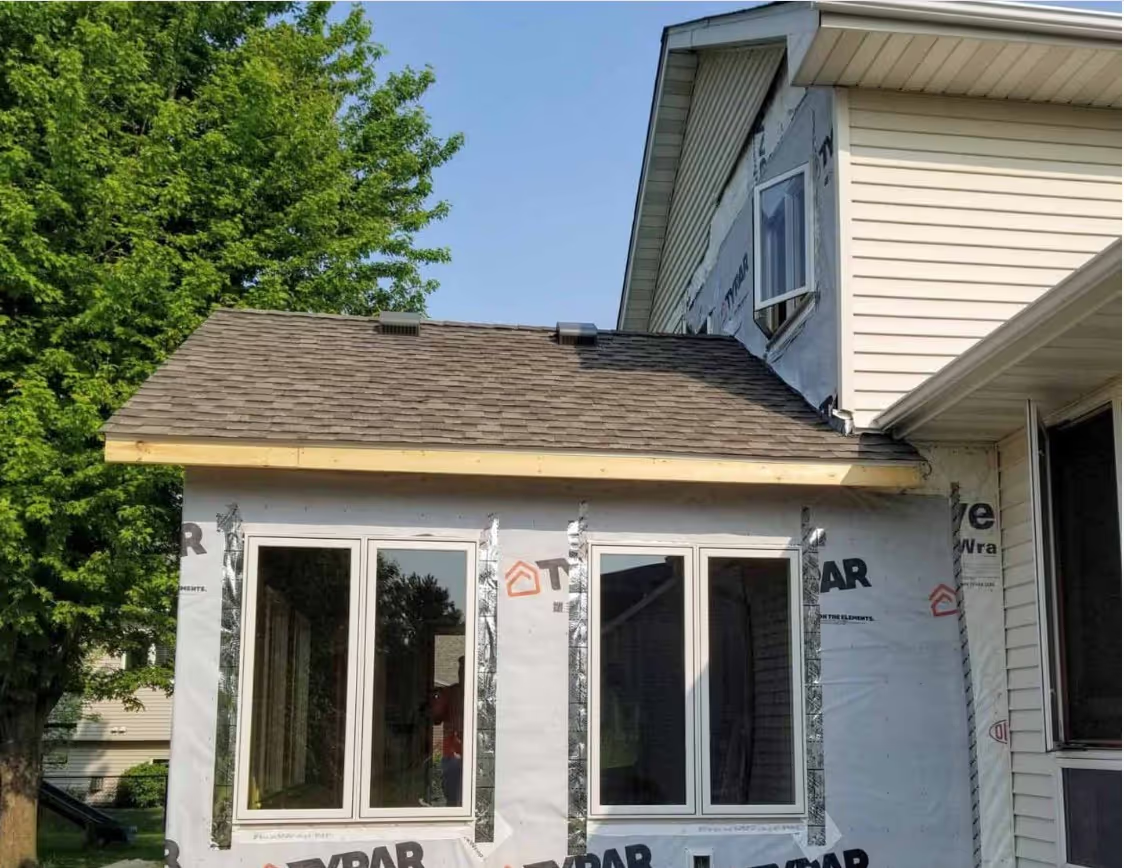
You've outgrown your home, but you love your neighborhood. Your kids attend great schools in Lakeville, you're minutes from your Prior Lake workplace, or you've built relationships with Apple Valley neighbors over years of block parties and snow shoveling. The thought of uprooting your family and navigating the Twin Cities housing market feels overwhelming.
So you face the question thousands of South Metro homeowners ask: Should you add on or finish the basement?
At Country Creek Builders, this is one of the most common conversations we have with families throughout the South Metro. After completing 586+ projects across Lakeville, Apple Valley, Prior Lake, and Rosemount, we've helped dozens of homeowners navigate this exact decision. The answer isn't the same for everyone—it depends on your specific needs, your property's characteristics, and your long-term plans.
This comprehensive guide walks through everything you need to know to make an informed decision between a home addition and basement finishing. We'll cover real costs, timelines, return on investment, practical considerations, and the scenarios where each option makes the most sense.
Before comparing additions and basements, let's identify what problem you're actually trying to solve. The right solution depends entirely on your specific needs.
Your family has expanded, but your house hasn't. Kids are sharing bedrooms who shouldn't be, or you've converted the dining room into a temporary bedroom. You need legitimate additional living space—bedrooms, bathrooms, or family areas where people can have privacy and personal space.
What you actually need: Legal bedrooms (with egress windows and closets), dedicated bathrooms, and functional living spaces that integrate with your main floor lifestyle.
Addition advantage: Creates bedrooms and bathrooms that feel like natural extensions of your home's main living areas, with natural light and easy access.
Basement advantage: Can create legal bedrooms with proper egress windows at a lower cost per square foot, though they'll feel somewhat separate from main floor living.
Your family loves hosting—game nights, holiday gatherings, birthday parties. But your current layout forces guests to crowd into one small living room or overflow into bedrooms. You need dedicated entertaining space that can accommodate groups without disrupting normal living areas.
What you actually need: Flexible space for gatherings that can be messy or loud without affecting daily family life. You want a home theater, game area, bar space, or casual gathering zone.
Addition advantage: Creates bright, accessible gathering spaces that guests can reach without traipsing through your home. Four-season porches or sunrooms extend your living area seamlessly.
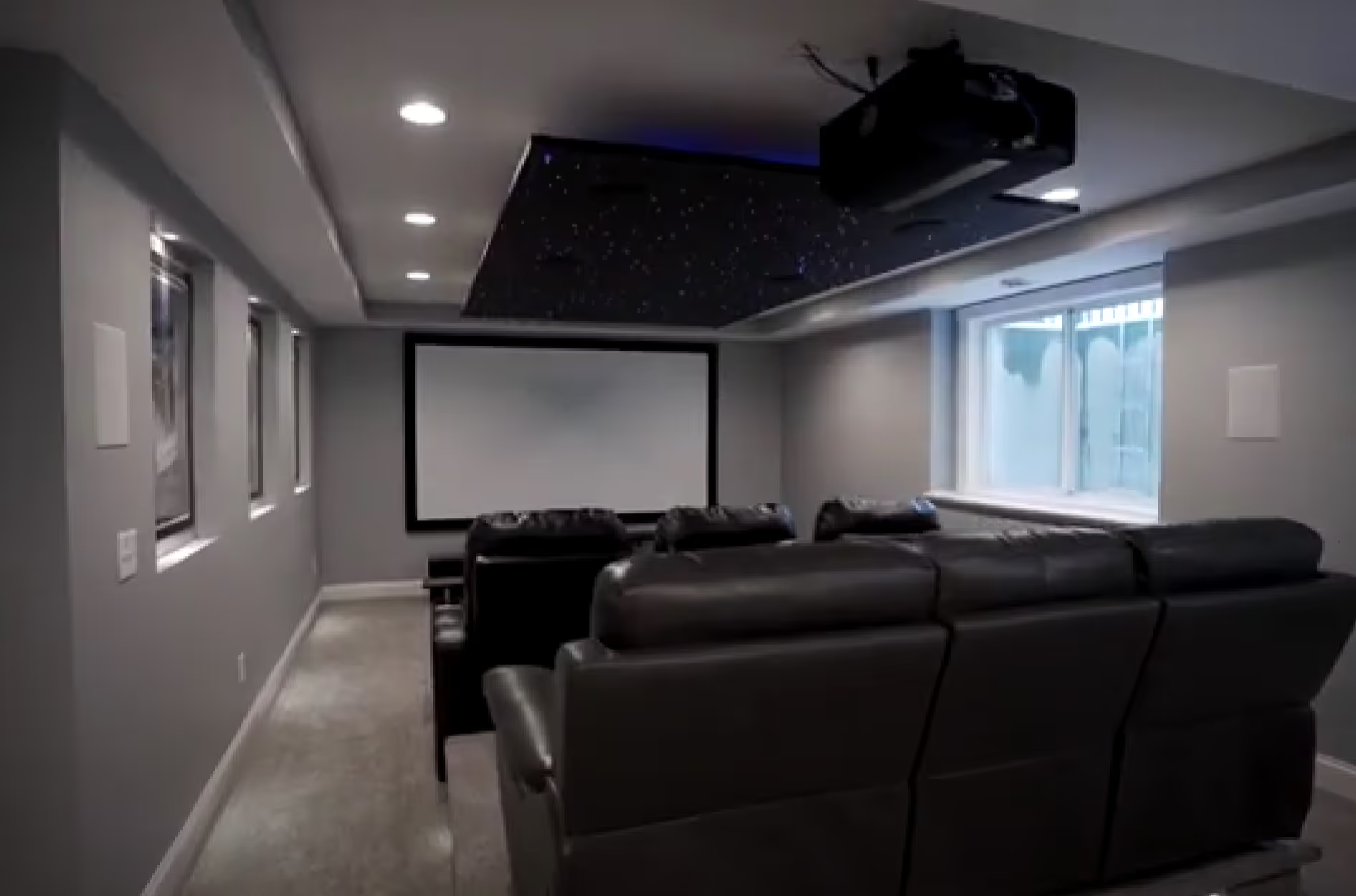
Basement advantage: Perfect for entertainment spaces—home theaters work brilliantly in basements with controlled lighting, and bar areas feel natural in lower levels. The separation from main floor living is actually an advantage for entertaining.
Remote work has become permanent, but you're taking Zoom calls from your bedroom or trying to concentrate at the kitchen table. You need dedicated office space that separates work from family life.
What you actually need: A quiet, professional space with good lighting, proper technology infrastructure, and a door you can close during video conferences.
Addition advantage: Creates a true home office with natural lighting and separation from the household chaos, ideal for client-facing work or video conferences where background matters.
Basement advantage: Provides quiet separation from family noise at lower cost, though natural lighting is limited. Perfect for focused work that doesn't require impressing clients with your background.
Aging parents need to move in, or adult children are returning home. You need a semi-independent living suite with bedroom, bathroom, and some privacy from the main household.
What you actually need: A complete living suite with its own bathroom, sleeping area, and ideally some kitchenette or beverage space. Accessibility and ease of access are crucial considerations.
Addition advantage: Can be designed at ground level for accessibility, with its own entrance if desired. Natural light and connection to outdoor spaces support aging adults' wellbeing.
Basement advantage: Costs significantly less and can include a full bathroom and kitchenette, though basement stairs present accessibility challenges for those with mobility issues.
Your specific scenario dramatically affects which solution makes more sense. Let's dig into the practical details of each option.
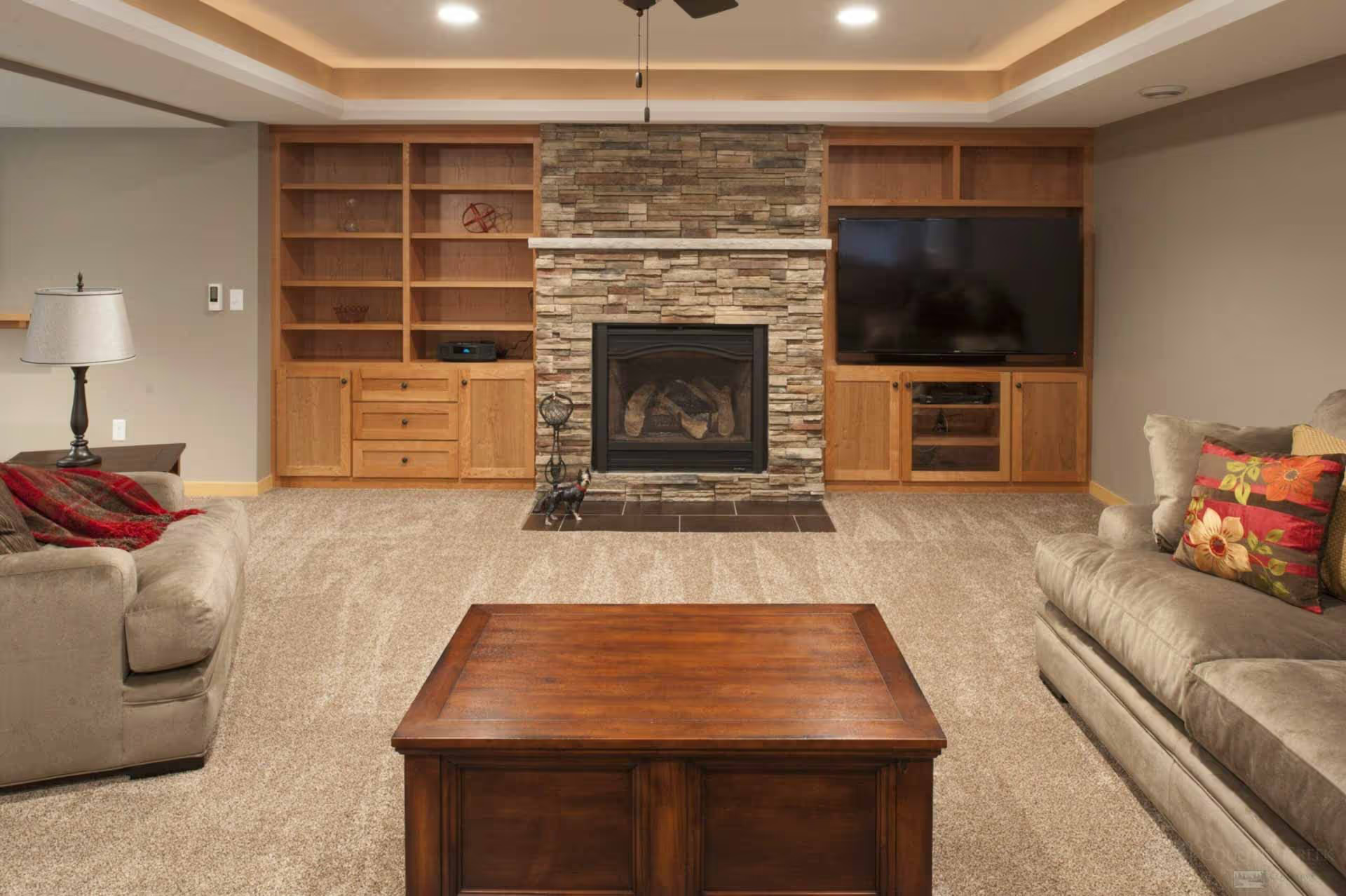
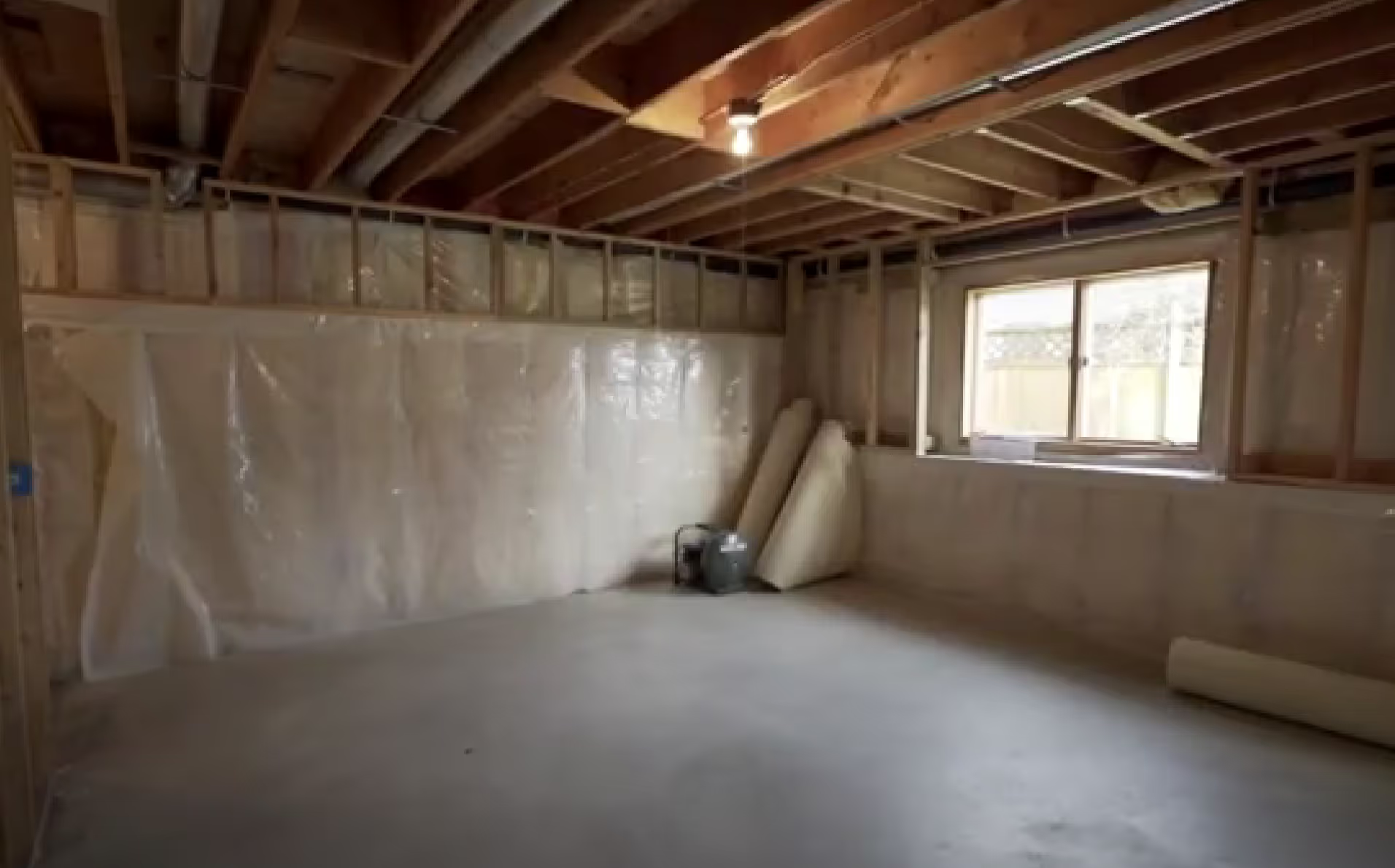
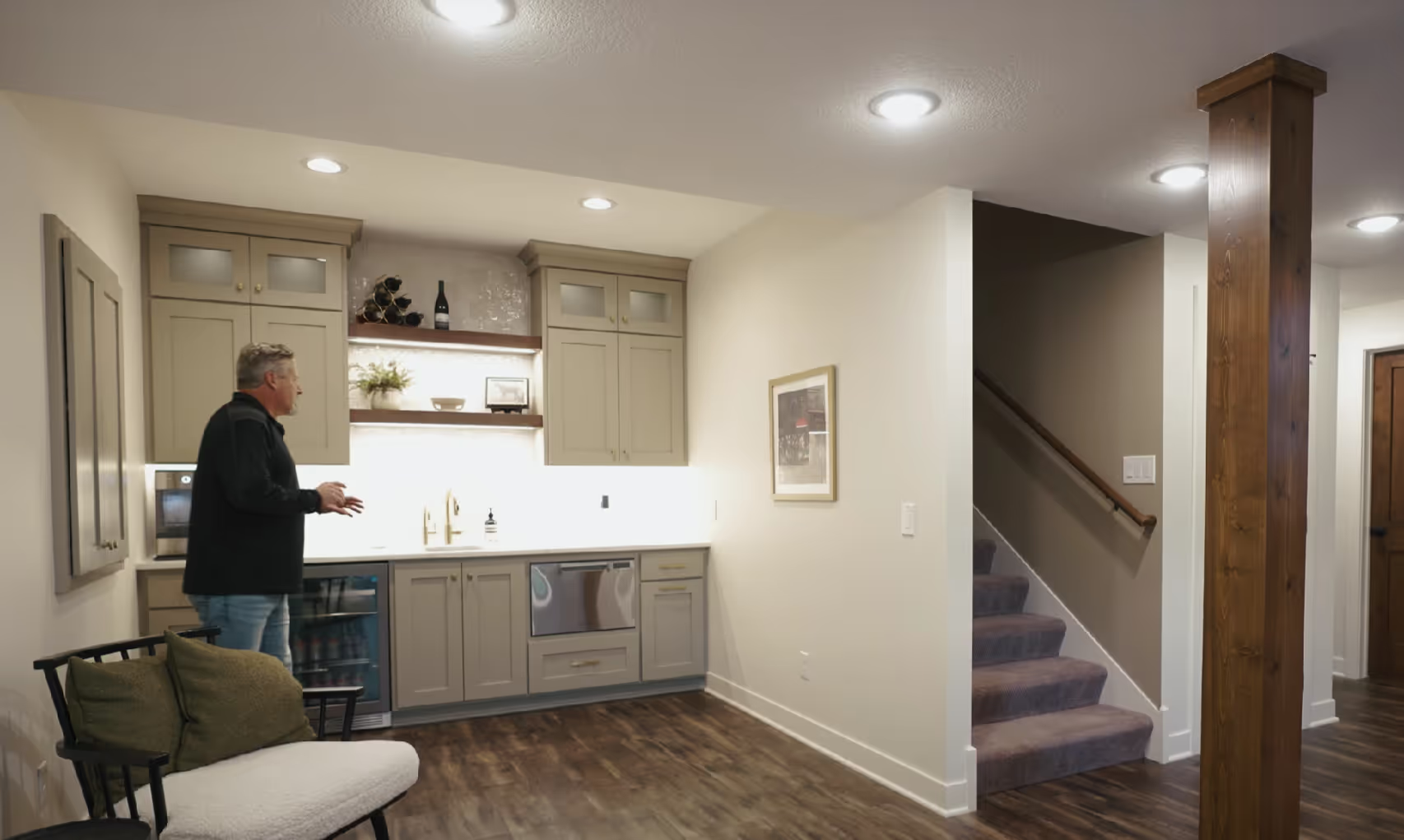
Finishing your basement transforms unusable storage space into functional living area. You're working within your home's existing footprint, using space you've already paid to heat and cool.
We provide transparent basement finishing pricing across four tiers based on size and features:
Tier 1: $85,000-$100,000
Tier 2: $100,000-$125,000
Tier 3: $125,000-$140,000
Tier 4: $140,000+
These prices reflect complete, turnkey basement finishing with all permits, materials, and labor from our full-time craftsmen (we don't use subcontractors). Each project includes framing, electrical, plumbing, HVAC, insulation, drywall, painting, flooring, and finish carpentry.
For that investment, basement finishing delivers:
Substantial square footage: You're typically adding 800-1,500 square feet of finished living space—roughly equivalent to adding two or three rooms to your home.
Complete bathroom facilities: Every finished basement should include at least one full bathroom. This isn't optional—it's what makes the space truly functional for guests, teenagers, or multigenerational living.
Entertainment and gathering spaces: Basements excel as home theaters, game rooms, bar areas, and casual family spaces. The lower level location means noise doesn't disrupt main floor living.
Flexible use over time: Today it's a teenagers' hangout space. In five years it's a home gym. In ten years it's a guest suite when the kids move out. Basement spaces adapt as your family's needs change.
Increased home value: A properly finished basement typically returns 60-75% of its cost at resale in the South Metro market. More importantly, homes with finished basements sell significantly faster than those without.
Finishing a basement in Minnesota isn't just about aesthetic preferences—it requires strict compliance with building codes that protect your family's safety:
Egress windows for bedrooms: Any bedroom must have an egress window sized to allow emergency escape. These windows must meet specific size requirements and can only be installed where the basement walls are above ground level. This constraint limits which areas of your basement can legally become bedrooms.
Ceiling height minimums: Minnesota requires 7-foot ceiling heights in finished living spaces (some areas allow 6'8"). If your basement has ductwork, support beams, or plumbing that reduces clear height, those areas can't be finished as living space.
Radon mitigation: Minnesota has some of the highest radon levels in the nation. Radon testing or mitigation systems are mandatory for finished basements to protect your family from this cancer-causing gas.
Moisture management: Basements in Minnesota face unique moisture challenges from freeze-thaw cycles, clay soil, and seasonal water tables. Proper water management must be addressed before finishing—otherwise, you'll face mold, mildew, and expensive repairs.
Electrical and HVAC codes: Your electrical panel must have capacity for the additional circuits. HVAC must extend to finished spaces with proper heating and cooling capacity.
These requirements add complexity and cost compared to basement finishing in other states. However, they protect your family and ensure your investment won't become a costly liability.
A typical basement finishing project with Country Creek Builders spans 8-12 weeks from start to completion:
The advantage? You're living in your home throughout the project. Our craftsmen access the basement through exterior doors or through your main floor, but your daily life continues relatively normally. No temporary relocation required.
Basement finishing is the ideal solution when:
You need entertainment or recreation space. Home theaters, game rooms, bar areas, and casual family spaces work brilliantly in basements. The lower level location and controlled lighting are actually advantages for these uses.
Your lot doesn't allow additions. Many South Metro properties face setback restrictions, easements, or small lot sizes that make additions impossible or impractical. Your basement may be your only expansion option.
Budget is a primary concern. Basement finishing delivers the most square footage for your investment—roughly 40-60% less per square foot than additions for comparable space.
You want flexible, casual space. Basements work beautifully for spaces where you don't mind the slightly separated, underground feel. They're perfect for teenagers who want their own zone, for messy hobbies, or for gatherings where you don't need natural light.
You're creating rental income potential. Some South Metro homeowners finish basements as potential rental suites (check local regulations—many cities restrict this). The separate entrance and living facilities make this possible.
Your home's main level layout is already good. If you're happy with your main floor bedroom and bathroom configuration, but you just need more space for activities, basement finishing makes sense.
Building an addition expands your home's footprint, creating new space that integrates seamlessly with your existing main level living.
Addition costs vary dramatically based on size, complexity, and type. Unlike basement finishing where we can provide relatively consistent tier pricing, additions are inherently custom projects with costs influenced by:
Foundation requirements: Is your addition going on a slab, crawl space, or full basement? Full basement foundations double the excavation and foundation costs compared to slab-on-grade.
Second story vs. main level: Adding a second story over existing space is significantly more expensive than building out at ground level, requiring structural reinforcement, temporary roof removal, and extensive disruption to the home during construction.
Exterior finishes matching: Your addition must match your existing home's siding, roofing, and trim. If your home has expensive materials (brick, stone, cedar shake) or discontinued siding, matching costs escalate.
Plumbing complexity: Adding bathrooms requires extending plumbing lines, which varies in difficulty based on your home's existing plumbing location. Adding a second-story bathroom above an unplumbed first floor is extraordinarily expensive.
Structural complexity: Load-bearing walls, roof lines, and integration with existing structure all affect costs. Simple rectangular additions cost significantly less than complex designs with multiple roof angles.
Site accessibility: Can equipment access your backyard easily, or will everything need to be hand-carried around your house? Difficult sites increase labor costs substantially.
With those variables acknowledged, here are typical South Metro addition costs:
Master Suite Addition (15x20 feet): $150,000-$250,000
Includes bedroom, bathroom, and closet with foundation, framing, roof, electrical, plumbing, HVAC, and finishes.
Family Room Addition (16x24 feet): $120,000-$180,000
Living space with foundation, exterior walls, roof, windows, electrical, HVAC, and finishes matching existing home.
Kitchen Expansion (extending 8-10 feet): $100,000-$175,000
Depends heavily on foundation type and how much of the existing kitchen is remodeled simultaneously.
Four-Season Porch (14x20 feet): $80,000-$140,000
Insulated, heated/cooled space with substantial windows creating indoor/outdoor connection.
Second Story Addition (entire floor): $250,000-$400,000+
Most expensive per square foot due to structural requirements, temporary living arrangements, and complete exterior work.
These ranges reflect complete, permitted additions built by experienced South Metro remodeling contractors who pull their own permits, carry proper insurance, and stand behind their work.
The higher cost of additions buys you things basement finishing simply cannot provide:
Natural light: Windows, skylights, and glass doors flood additions with daylight. For living spaces where you spend significant time, this natural connection to the outdoors dramatically improves wellbeing and mood.
Seamless integration: A properly designed addition feels like it was always part of your home. There's no transition to a different level, no basement feel, no separation from main floor living.
Outdoor access: Additions can include doors to decks, patios, or yards. This indoor-outdoor flow enhances entertaining and daily living in ways basements never can.
Flexibility for any use: Additions work for any purpose—bedrooms, bathrooms, kitchens, living areas, home offices, or master suites. You're not limited by moisture concerns, ceiling heights, or egress window requirements.
Higher resale value: Additions typically return 60-80% of their cost at resale (varies by type and quality), but more importantly, they appeal to a broader buyer pool than finished basements.
Ground-level accessibility: For families with mobility-impaired members or planning for aging in place, ground-level additions avoid stairs entirely.
Building an addition faces constraints that basement finishing doesn't:
Setback requirements: Cities throughout the South Metro enforce setback rules—minimum distances from your property lines. Your addition must comply with front, side, and rear setbacks, which may limit or prevent additions entirely on smaller lots.
Lot coverage limits: Many cities restrict what percentage of your lot can be covered by structures. If you're already near this limit, an addition may be impossible.
Easements and right-of-ways: Utility easements, drainage easements, or private right-of-ways across your property may prohibit building in certain areas.
Homeowners association approval: Many neighborhoods require HOA approval for exterior changes, including additions. Some HOAs prohibit additions entirely or restrict their size and location.
Neighbor considerations: An addition might block neighbors' views or light, potentially creating conflicts even if legally permissible.
Working with a contractor experienced in South Metro building codes and permitting is crucial. We assess these issues during initial consultations, often preventing homeowners from spending money on designs that can't be built.
Additions require significantly more time than basement finishing:
Total timeline: 4-7 months from design start to completion
Minnesota weather affects this timeline significantly. Foundation work and exterior construction can't happen when ground is frozen or snow-covered. Most South Metro additions break ground in spring (April-May), allowing completion before winter.
Home additions are the ideal solution when:
You need a main floor master suite. Aging homeowners who can no longer handle stairs, or families who want master bedroom privacy away from children's bedrooms, benefit tremendously from main floor master additions.
Natural light is essential. For home offices with video conferences, art studios, morning breakfast nooks, or any space where you'll spend significant daily time, natural light dramatically improves the experience.
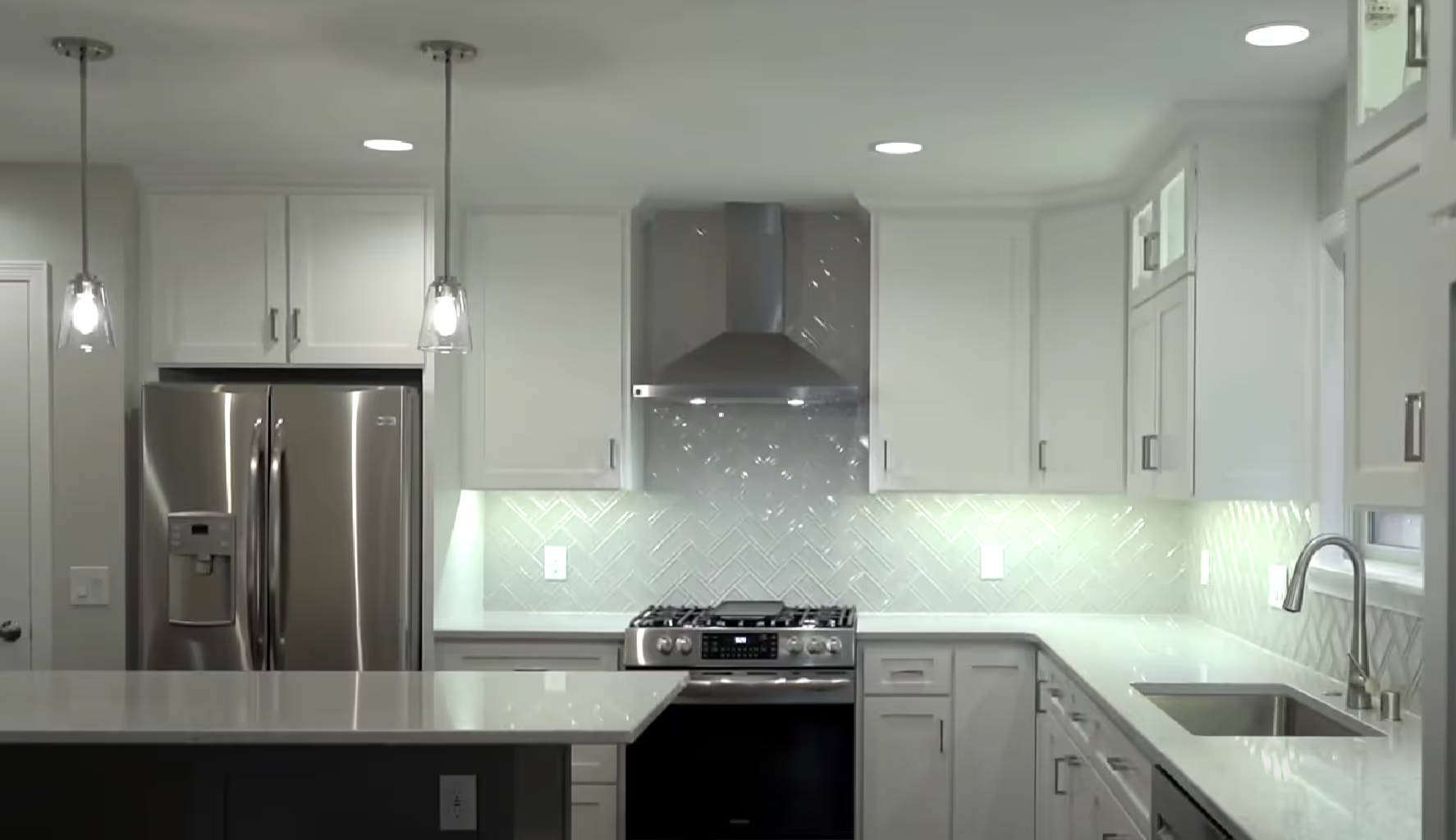
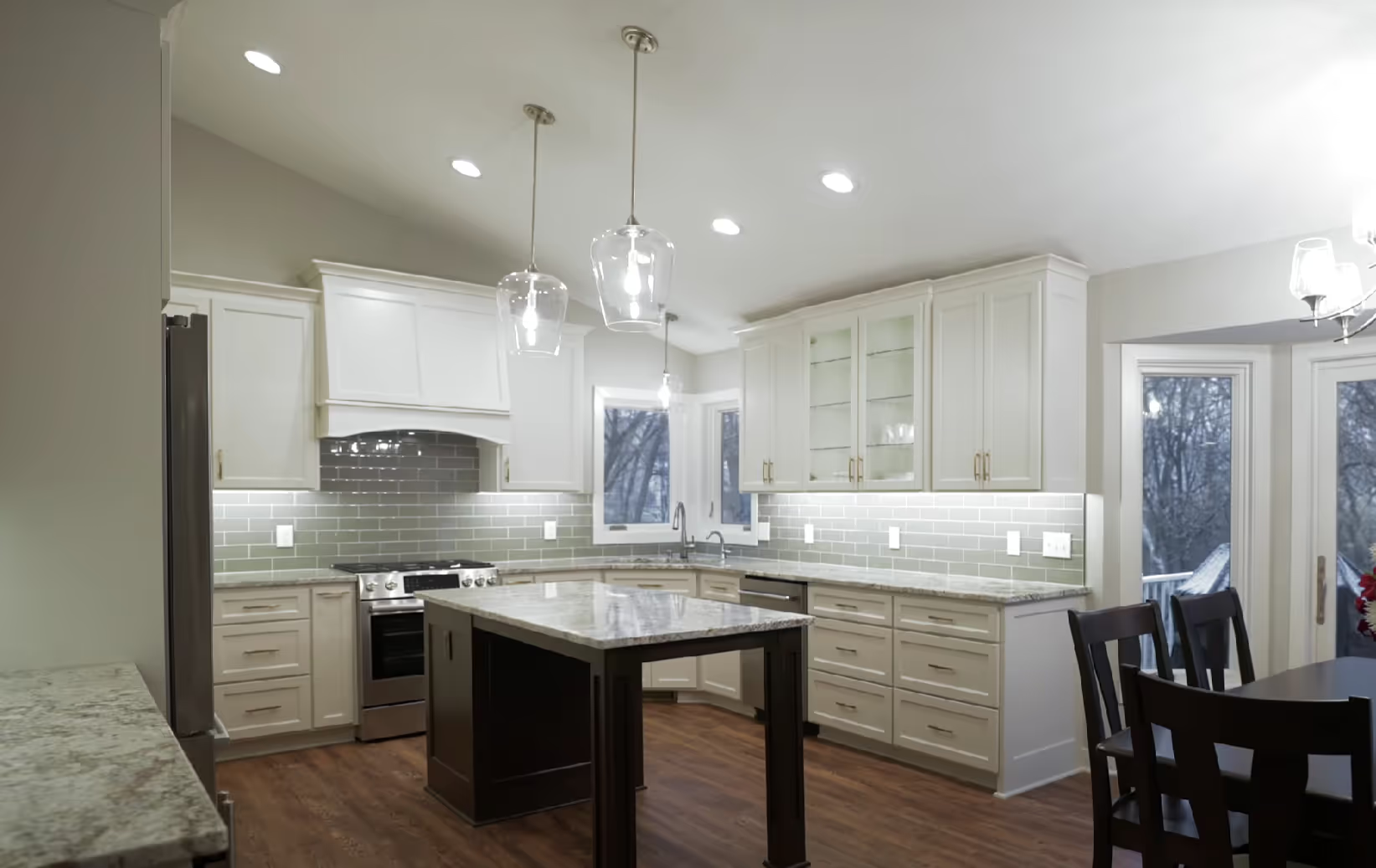
You're expanding your kitchen or main living area. Additions allow you to fundamentally change your main floor layout—opening walls, expanding the kitchen, creating the great room you've always wanted.
You want a four-season porch or sunroom. These hybrid indoor/outdoor spaces are impossible to create in basements and deliver exceptional value for families who want to enjoy Minnesota's three-and-a-half pleasant seasons.
Your basement is already finished. If you've already utilized your basement space, additions are your only expansion option.
Resale value is a priority. High-quality additions in desirable South Metro neighborhoods typically deliver stronger ROI than basement finishing, particularly master suites and living space additions.
You want outdoor connectivity. Adding French doors to a new deck, creating a morning room with patio access, or building a kitchen expansion that opens to your yard—these indoor/outdoor lifestyle improvements are impossible with basements.
Let's directly compare these options across the factors that matter most to South Metro homeowners:
Basement finishing: $85-$120 per square foot depending on finishes and features
Home addition: $200-$350+ per square foot depending on complexity and type
For pure square footage, basement finishing delivers 2-3 times more space for the same investment. If your primary goal is maximizing usable space on a budget, basements win.
However, this comparison oversimplifies. The basement space and addition space aren't equivalent—they offer fundamentally different qualities and uses.
Basement finishing: Typically returns 60-75% of cost at resale. Adds appeal to home listings and increases buyer pool, but doesn't increase taxable square footage in most Minnesota jurisdictions.
Home addition: Returns 60-80% of cost depending on type and quality. Master suites and four-season porches typically deliver higher returns than extra bedrooms or family rooms. Increases your home's taxable square footage.
Both investments return less than their full cost, which means you shouldn't make this decision purely on resale calculations. The value you derive from actually using the space during the years you live there matters more than the small amount you might lose at resale.
Basement finishing: 8-12 weeks from start to completion. You live in your home throughout the project with minimal disruption to daily life. Access is typically through exterior basement doors or a contained area of your main floor.
Home addition: 4-7 months from design to completion. Significant disruption during construction—noise, dust, workers accessing your home, temporary loss of yard space, and potential weather delays. Some families temporarily relocate during portions of the project.
If you need the space quickly or can't tolerate months of construction disruption, basement finishing is considerably more convenient.
Basement finishing: Possible in virtually any home with an unfinished basement. Primary constraints are ceiling height (need 7+ feet clear), moisture issues (must be resolved first), and egress window locations for bedrooms.
Home addition: Frequently constrained or prevented by setbacks, easements, lot coverage limits, HOA rules, or site access issues. Requires careful property analysis before design work begins.
Many South Metro homeowners explore additions first, only to discover their property won't accommodate one. Basement finishing then becomes the only option for gaining space.
Basement finishing: Excellent for entertainment spaces, recreation areas, teenage hangouts, home gyms, craft rooms, and guest suites. Less ideal for home offices with video conferences, spaces where you spend significant daily time, or anything requiring substantial natural light.
Home addition: Works brilliantly for any use—bedrooms, bathrooms, kitchens, dining rooms, home offices, master suites, or living areas. No limitations based on use type.
Consider what you're actually going to use the space for. If it's a home theater, basement finishing is perfect. If it's a home office where you'll spend 8 hours daily on Zoom calls, an addition makes more sense.
Basement finishing: Space remains somewhat separate from main floor living. As your family's needs change over decades, basement spaces can be repurposed fairly easily—today's game room becomes tomorrow's home gym becomes next decade's guest suite.
Home addition: Becomes a permanent, integrated part of your home's main floor. This integration is both an advantage (seamless living) and a constraint (harder to repurpose dramatically).
Both options offer flexibility, just in different ways.
Basement finishing: Requires navigating stairs, making it increasingly challenging as mobility declines. Not ideal for aging-in-place planning unless you're specifically creating a main floor accessibility plan.
Home addition: Can be designed for accessibility—ground level, wide doorways, roll-in showers. Main floor master suite additions specifically support aging in place.
For families planning to stay in their homes long-term, this accessibility factor often tips the decision toward additions.
Some South Metro homeowners discover that the right solution isn't choosing between basement finishing and an addition—it's doing both, either simultaneously or in phases.
You need different types of space. Finish the basement for entertaining and recreation, add on a main floor master suite for aging-in-place accessibility. Each space serves its purpose optimally.
Phased investment matches cash flow. Finish the basement now while kids are young and you need entertainment space. Add the main floor master suite in 5-10 years when you're ready to age in place.
You're doing a comprehensive remodel. Some families tackle major renovations all at once—kitchen remodel, basement finishing, and addition simultaneously. This comprehensive approach disrupts life once rather than repeatedly, and can actually save money through material efficiencies and single permit fees.
Your property allows both but not large additions. Your setbacks might allow a small addition (four-season porch, breakfast nook, etc.) but not a major expansion. Pairing this small addition with full basement finishing maximizes your space within property constraints.
If you're planning both eventually, which should come first?
Finish the basement first if:
Build the addition first if:
There's no universal right answer—it depends entirely on your specific situation and priorities.
After helping dozens of South Metro families navigate this exact decision, we've developed a framework that cuts through the confusion:
Write down specifically what you need:
Be honest about needs versus wants. "We need a home theater" might actually be "We want a TV viewing area." The former pushes you toward basement finishing; the latter could be satisfied either way.
Before spending money on detailed designs, understand your property's constraints:
If additions face significant property constraints, this might decide for you.
When do you need the space?
Your timeline intersects with Minnesota seasons—foundation work requires unfrozen ground, exterior work requires reasonable weather. A family needing space in November can finish a basement before Christmas but couldn't complete an addition until the following summer.
What can you realistically invest?
Be honest about your budget. Overextending financially creates stress that undermines the joy these projects should bring.
Where will you be in 5, 10, or 15 years?
If you're planning to sell within 5 years: Consider which investment appeals more to typical South Metro buyers. Finished basements are expected in this market; they make homes show better and sell faster. Additions need to be appropriate to your neighborhood's norms—don't build a $200,000 master suite addition in a neighborhood of $300,000 homes.
If you're staying 10+ years: Optimize for your family's actual needs and desires. The value you derive from using the space for years outweighs resale calculation differences.
If you're aging in place: Accessibility considerations push strongly toward main floor additions or single-story living solutions.
Finally, talk to contractors who've completed both types of projects. At Country Creek Builders, our initial consultations assess your property, discuss your needs, and provide honest guidance about which solution makes more sense for your situation.
We're not trying to sell you on one option versus the other—we excel at both basement finishing and home additions. Our goal is matching you with the solution that truly fits your family's needs, budget, and property.
Sometimes that means delivering difficult news—your dream addition won't fit within setbacks, or your basement moisture issues require $15,000 of remediation before finishing makes sense. But this honest assessment saves you time, money, and frustration.
Let me share how three different South Metro families approached this decision, illustrating how personal circumstances drive the right choice.
The Johnson family had three teenagers sharing two bedrooms in their split-level home. The kids were constantly arguing about space, privacy, and bathroom access. The parents loved their Prior Lake neighborhood and schools but desperately needed more space.
Property analysis revealed that their lot was too small for a meaningful addition—setbacks allowed only a tiny bump-out that wouldn't solve their space problems. However, they had an unfinished 1,400 square foot basement with good ceiling height.
We designed a Tier 3 basement finish ($132,000) that created two separate teenage zones—each with its own bedroom, bathroom, and recreational area. The separated spaces reduced sibling conflict dramatically. The parents kept the upstairs master suite, while the teenagers gained independence downstairs.
Today, four years later, the Johnsons report this was the perfect solution. The basement gives their teenagers appropriate separation while keeping everyone under one roof. When the kids eventually move out, the space will transition beautifully into guest suites or entertainment areas.
Why basement finishing won: Property constraints prevented additions, budget favored basement finishing, and the separated lower level space was actually ideal for creating teenage independence.
The Andersons, in their early 60s, loved their Apple Valley home but faced a growing problem—their master bedroom was upstairs, and climbing stairs was becoming difficult for Mrs. Anderson's arthritic knees.
They initially considered finishing their basement as a bedroom suite, but the stairs to the basement were actually steeper than their main staircase. Basement finishing would have made things worse, not better.
We designed a 400 square foot main floor master suite addition ($185,000) extending off their existing main floor. The new master included a luxurious bathroom with a roll-in shower, a spacious bedroom with patio doors to their backyard, and a large walk-in closet.
The old upstairs master became a guest suite for visiting children and grandchildren. The Andersons now live entirely on the main floor, planning to age in place comfortably for another 10-20 years.
Why addition won: Accessibility requirements demanded main floor living, basement stairs were steeper than main stairs, and they had yard space and budget for an addition that perfectly solved their aging-in-place needs.
The Williamson family needed more space immediately—four kids in three bedrooms, one bathroom for six people, and no real gathering space for the family.
We worked with them on a phased approach that matched their budget and priorities. Phase 1 ($125,000, completed 2022) finished their 1,200 square foot basement with two bedrooms, a full bathroom, and a large recreation area. This immediately solved the bedroom shortage and bathroom congestion.
Phase 2 ($165,000, completed 2024) built a main floor master suite addition with a luxury bathroom and walk-in closet. This moved the parents downstairs to the main floor, giving the upstairs entirely to the four kids.
The phased approach allowed them to spread the $290,000 total investment across three years, matching their income growth and bonus schedule. More importantly, each phase delivered immediate quality-of-life improvements rather than saving up for years to do everything at once.
Why both won: The family had multiple distinct needs—some solved optimally with basement finishing, others requiring an addition. Phasing matched their financial capacity and delivered immediate benefits at each stage.
Whether you choose basement finishing, an addition, or both, understanding financing options helps you make realistic decisions.
Paying cash eliminates interest costs and loan approval hassles. If you have the liquidity and it doesn't deplete your emergency reserves, cash payment makes financial sense.
For basement finishing projects ($85,000-$140,000), many South Metro families have saved this amount over several years, particularly if they've been in their home long enough to build substantial equity.
For additions ($150,000-$300,000+), cash payment is less common unless you've received an inheritance, sold another property, or have unusually high savings.
HELOCs allow you to borrow against your home equity as needed. You draw funds when expenses arise (purchasing materials, paying contractors), paying interest only on the amount actually borrowed.
Advantages: Flexibility to borrow only what you need, interest-only payments during the draw period, and typically lower interest rates than personal loans or credit cards.
Considerations: Rates are variable (they can increase), your home secures the debt (default risk), and you'll need substantial equity to qualify. Most lenders allow borrowing up to 85% of your home's value minus your remaining mortgage.
HELOCs work well for projects with uncertain exact costs or those completed in phases.
Home equity loans provide a lump sum upfront with fixed interest rates and set repayment terms (typically 5-15 years).
Advantages: Fixed monthly payments make budgeting easier, rates are fixed (no increase risk), and closing costs are often lower than refinancing.
Considerations: You borrow the full amount upfront (paying interest on money you might not need immediately), and your home secures the loan.
Home equity loans suit projects with known, fixed costs like basement finishing with detailed contracts.
Refinancing your mortgage for more than you currently owe and taking the difference in cash provides potentially the lowest interest rates of any financing option.
Advantages: Typically the lowest interest rates available, single monthly payment combining mortgage and project funding, and potential tax deductibility of interest.
Considerations: Only makes sense if you can refinance at a similar or lower rate than your current mortgage. Closing costs (1-3% of loan amount) can be substantial. You're extending your mortgage term unless you carefully structure the refinance.
In the current interest rate environment (early 2025), cash-out refinancing works well only if you have an existing mortgage with a much higher rate than current offerings.
Don't overextend: A general rule suggests housing costs (mortgage, taxes, insurance) shouldn't exceed 28% of gross income. Adding project financing temporarily increases this burden. Ensure you maintain comfortable emergency reserves.
Consider tax implications: Interest on home equity debt used for "substantial improvements" to your property may be tax deductible. Consult a tax professional—this isn't tax advice, but it's worth exploring with your accountant.
Get quotes from multiple lenders: Interest rates and terms vary significantly between lenders. A 0.5% rate difference on a $100,000 loan costs you thousands of dollars over the loan term.
Whether you ultimately decide on basement finishing, a home addition, or both, working with experienced South Metro remodeling contractors who excel at both options gives you genuine advice rather than sales pressure toward whichever service a contractor offers.
Country Creek Builders approaches both basements and additions through our proven design-build process:
Initial consultation: We visit your home to understand your needs, assess your property, discuss budget parameters, and provide initial guidance about which solution makes most sense for your situation.
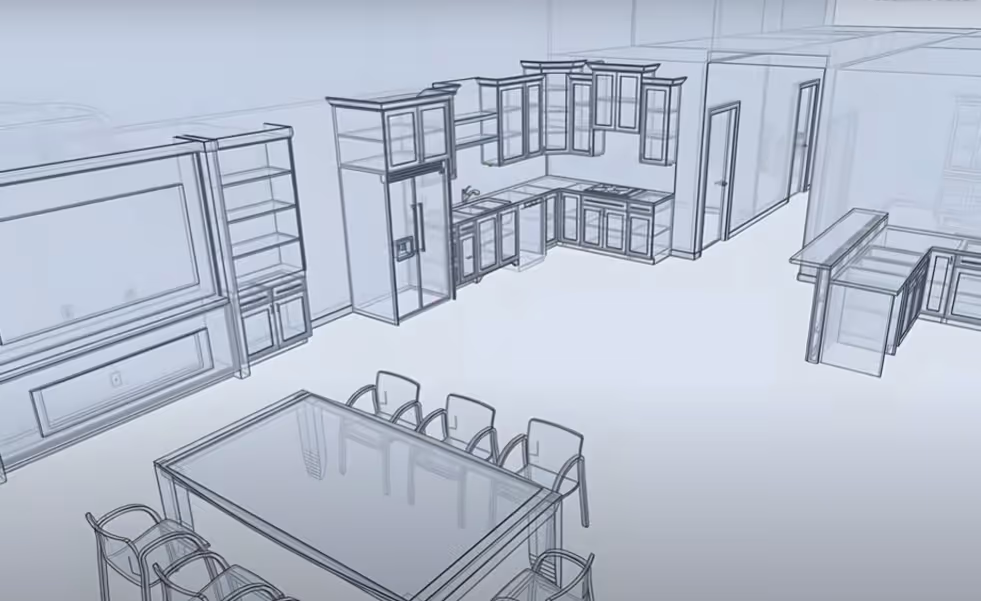
In-house design services: Our design team creates detailed plans specifically for your project. We're not relying on third-party architects who've never built what they design—our designers understand construction realities and create plans that work within your budget.
Transparent pricing: We provide iron-clad quotes before any work begins. You'll know exactly what you're paying, when payments are due, and what's included. No vague pricing that balloons once you're committed.
Full-time craftsmen: We don't use subcontractors. Every person working on your project is a Country Creek Builders full-time employee—carpenters, painters, tile experts, trim carpenters. This accountability and quality control is central to our 586+ successful projects across the South Metro.
Project management: Someone from our team oversees your project daily, ensuring quality and keeping everything on schedule. You're never wondering what's happening or when the next phase begins.
Permit handling: We pull all necessary permits and handle inspections. You don't need to navigate South Metro building departments—we manage all regulatory requirements.
When you're choosing between basement finishing and additions, you need honest guidance, not sales pressure toward whatever a contractor prefers to build.
Because we excel at both basements and additions, we have no incentive to push you toward one versus the other. Our goal is matching you with the solution that genuinely fits your needs, budget, and property.
Sometimes that means delivering difficult news—your property won't accommodate the addition you envisioned, or your basement moisture requires expensive remediation before finishing makes sense. But this honesty saves you time, money, and frustration.
We've completed additions that turned out smaller than homeowners initially wanted—but fit beautifully with their homes and stayed within budget. We've finished basements where homeowners initially wanted additions—and they're thrilled with the result because it better matched their actual needs and uses.
You've now got the information needed to make an informed decision between basement finishing and home additions. The right choice depends entirely on your specific needs, property characteristics, budget, timeline, and long-term plans—not on generic advice about which option is "better."
Here's what we recommend:
If you're still uncertain which option fits your situation: Schedule a no-pressure consultation where we assess your property, understand your needs, and provide honest guidance about which solution makes sense. Sometimes seeing your specific situation through experienced eyes clarifies the decision immediately.
If you're certain you want basement finishing: Contact us to discuss your vision, budget, and timeline. We'll explain our basement finishing process, show you examples of similar projects, and provide transparent pricing.
If you're certain you want an addition: Reach out to discuss your property, the type of addition you're considering, and your budget parameters. We'll assess feasibility and provide realistic expectations about timeline and investment.
If you're considering both in phases: We can help you develop a comprehensive plan that sequences projects optimally for your budget and priorities, ensuring each phase delivers value rather than creating challenges for future work.
At Country Creek Builders, we believe your home should enhance your lifestyle, not limit it. For 25+ years, we've helped South Metro families solve their space challenges through thoughtful design, expert craftsmanship, and honest guidance about which solutions genuinely fit their needs.
Whether that's basement finishing, a home addition, or a phased combination of both, we're here to help you make the right decision for your family.
Contact Country Creek Builders to schedule your consultation. Let's explore together which space expansion option makes the most sense for your Lakeville, Apple Valley, Prior Lake, or Rosemount home.
Your family deserves space that supports how you actually live. Let's create it together.
We're based out of the South Metro Twin Cities, and we serve both