The experts at Country Creek Builders explain modern kitchens in 2026.
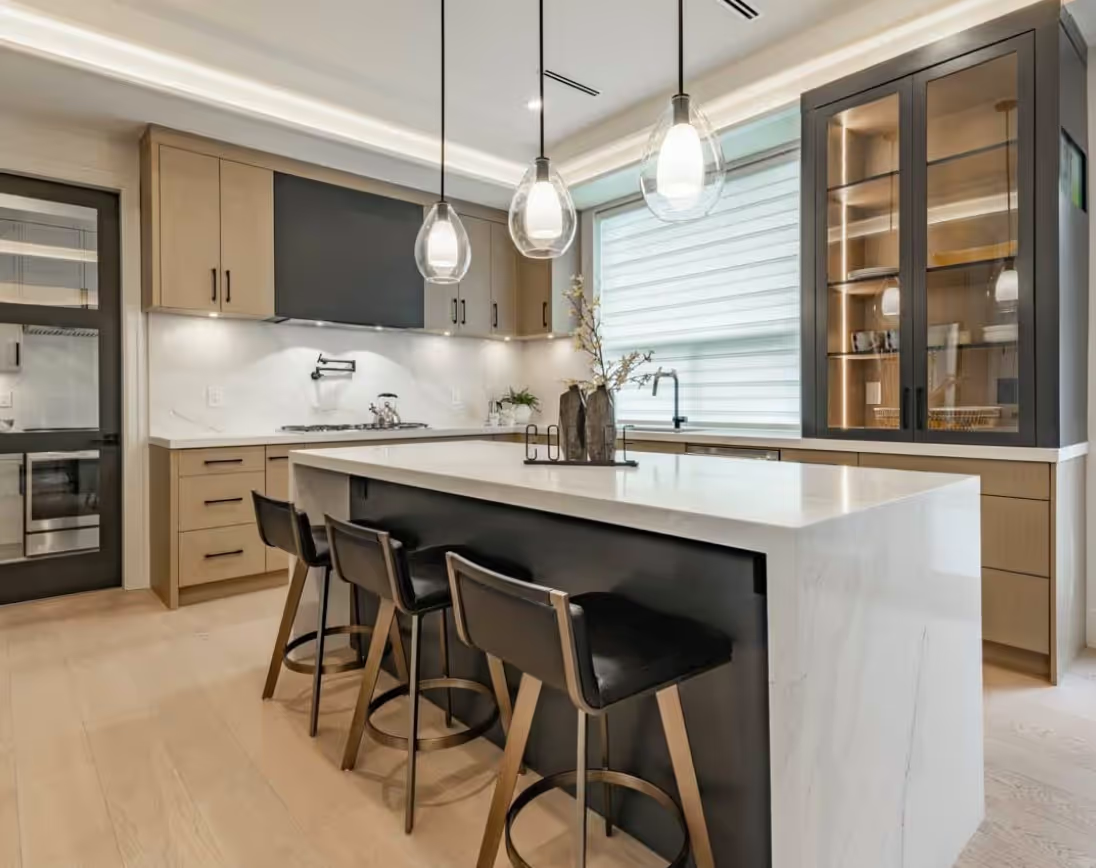
For decades, the kitchen work triangle dominated kitchen design thinking across Lakeville, Apple Valley, Prior Lake, and the entire South Metro. The concept was simple: create an efficient triangle between your sink, stove, and refrigerator to minimize steps during meal preparation. But here's what most homeowners don't realize—the work triangle was designed in the 1940s for a very different kind of kitchen and a very different way of cooking.
Today's South Metro families don't cook the way their grandparents did. Multiple cooks share the space simultaneously. Kids do homework at the kitchen island while parents prep dinner. Guests gather around the kitchen during parties. The single-cook efficiency model simply doesn't match how modern families actually use their kitchens.
At Country Creek Builders, we've completed 586+ projects throughout the South Metro, and we've seen firsthand how poorly designed kitchen layouts create daily frustration for homeowners. The outdated work triangle creates bottlenecks during meal preparation and makes what should be a joyful gathering space into a source of stress. It's what we call "The Workflow Wrecker"—and it's time for a better approach.
The work triangle was brilliant for its time. In the 1940s, when this design principle emerged, kitchens were designed for one cook—typically the housewife—to efficiently prepare meals in a small, enclosed space. Refrigerators, stoves, and sinks were the only major work zones, and keeping them within 4-9 feet of each other made perfect sense for solo cooking.
But consider how your family actually uses your kitchen:
You're cooking with multiple people. Parents and kids often prepare meals together, especially on weekends. The traditional triangle creates traffic jams when two people try to access the refrigerator or sink simultaneously.
Your kitchen is a gathering space. Modern South Metro homes feature open floor plans where kitchens flow into living and dining areas. Family members and guests naturally gravitate to the kitchen, regardless of whether cooking is happening.
You have more appliances and work zones. Beyond the basic three, today's kitchens include microwaves, coffee stations, beverage refrigerators, prep sinks, islands with cooktops, and dedicated baking centers. The triangle simply can't account for this complexity.
Your cooking style has changed. You're not cooking from scratch three times daily like families in the 1940s. You're prepping ingredients, assembling meals, reheating leftovers, and accommodating various family members with different schedules and dietary needs.
The work triangle's biggest failure is that it optimizes for efficiency at the expense of everything else—connection, flexibility, and the reality of how multiple people share a kitchen space.
When our design team at Country Creek Builders approaches a kitchen remodel, we think in zones rather than triangles. This zone-based approach acknowledges that modern kitchens serve multiple functions simultaneously and must accommodate multiple users without creating bottlenecks.
Preparation Zone: This is where ingredients are chopped, measured, and assembled. In modern kitchens, this zone needs substantial counter space, ideally on both sides of the sink or extending from the refrigerator. The preparation zone should have landing space for groceries, cutting boards, and bowls, plus easy access to utensils and prep tools.
Cooking Zone: Centered around the cooktop or range, this zone includes the necessary clearance for safe cooking, landing space for hot pots and pans, and storage for cooking utensils, oils, and seasonings. In larger kitchens, we often create a second cooking zone with a wall oven or microwave station.
Cleaning Zone: The sink and dishwasher anchor this zone, which should include substantial counter space on at least one side for drying dishes or stacking dirty ones. The cleaning zone should be positioned to not interrupt traffic flow, as it's one of the most frequently used areas.
Storage Zone: This includes your refrigerator, freezer, and pantry. Modern kitchens benefit from multiple storage zones—a main refrigerator for everyday items, a beverage refrigerator near the dining area, and a pantry that's accessible but not in the primary workflow.
Serving Zone: Often overlooked in traditional design, this zone facilitates the transition from cooking to eating. It might include a raised breakfast bar, a peninsula with seating, or a designated counter area for plating food and beverages.
The key difference from the work triangle? These zones don't need to form any particular geometric pattern. Instead, they're arranged to minimize cross-traffic, provide clear sight lines for supervision, and allow multiple people to work simultaneously without getting in each other's way.
Sarah, a Prior Lake homeowner whose kitchen we remodeled in 2024, perfectly illustrates this shift. Her previous kitchen followed the traditional triangle—sink, stove, and refrigerator formed a tight, efficient pattern. But when she tried to cook with her teenage daughter, they were constantly bumping into each other.
Through our design process, we created distinct zones. The main cooking zone centered around a 48-inch range with substantial landing space. The preparation zone extended across the island, giving her daughter a dedicated workspace with its own sink. The serving zone transitioned seamlessly to the dining area, allowing finished dishes to be plated without disrupting ongoing cooking.
The result? Sarah can cook dinner while her daughter preps salad, her husband pours drinks at the beverage station, and guests gather at the island—all without anyone getting in anyone else's way. That's the power of zone-based design.
If there's one feature that's redefined modern kitchen layouts, it's the island. Not the small, cart-like islands of the past, but substantial, multifunctional islands that serve as the kitchen's command center.
A properly designed kitchen island creates what the work triangle never could—a central hub that multiple people can access simultaneously from different sides. It's the difference between a traffic jam and a well-orchestrated flow.
Size matters—but bigger isn't always better. We typically design islands between 4 and 10 feet long, depending on the kitchen size. An island that's too small won't provide adequate workspace, while an island that's too large will disrupt traffic flow around it.
The standard recommendation is to maintain at least 42 inches (ideally 48 inches) of clearance on all sides of the island. This allows two people to pass comfortably or for cabinet doors and dishwashers to open without blocking traffic. In our Lakeville kitchen projects, we often see homeowners sacrifice too much traffic space to maximize island size—and then regret it when the kitchen feels cramped despite being spacious.
Multiple functions require thoughtful planning. A kitchen island might serve as a prep station, breakfast bar, homework station, and serving area all in one day. This requires different counter heights, adequate electrical outlets (USB ports are increasingly popular), and storage that accommodates various needs.
Our design team typically incorporates different heights within the island design. The main work surface sits at standard counter height (36 inches), while a raised bar for seating extends 12-15 inches higher. This creates visual separation while allowing conversation between the cook and the diners.
Thoughtful appliance integration prevents bottlenecks. Should your cooktop be on the island? Should the dishwasher? These decisions dramatically affect kitchen workflow.
Cooktops on islands work beautifully for entertainers who want to engage with guests while cooking. However, they require proper ventilation (either a downdraft system or a substantial hood), and they eliminate that section of counter space for other tasks. We typically recommend cooktop islands only in larger kitchens where substantial additional counter space exists elsewhere.
Dishwashers on islands can be brilliant—or problematic. They work best when the island is large enough that opening the dishwasher doesn't completely block traffic flow. We often position dishwashers on the side of the island facing away from the main work zone, so loading and unloading doesn't disrupt cooking.
The open concept kitchen has become the standard in South Metro new construction and remodels, and for good reason. When the kitchen flows into the living and dining areas, family connection naturally increases. Parents can supervise homework while cooking dinner. Hosts can engage with guests rather than being isolated during food preparation.
But open concept designs present unique layout challenges that the old work triangle never anticipated.
In traditional enclosed kitchens, messy prep work and dirty dishes stayed hidden behind walls. In open concepts, everything is visible. This visibility requires strategic design decisions.
The working side vs. the presentation side. Smart kitchen layouts distinguish between the "working side" (where the messy cooking happens) and the "presentation side" (what's visible from the living area). We typically position the cooktop, sink, and primary prep areas on the working side, hidden from the main living space's direct sight line.
The island then becomes the presentation side—the beautiful, clean barrier between the messy kitchen work and the elegant dining/living space. This is why island aesthetics matter so much in open concept designs. The side facing the living area should be the most visually appealing, often featuring decorative end panels, open shelving, or wine storage.
Managing kitchen chaos in open spaces. The reality is that during meal prep, kitchens get messy. Successful open concept designs include strategies to contain this chaos:
One of our Apple Valley clients specifically requested a "party-ready" kitchen—one where she could cook while entertaining without guests seeing the behind-the-scenes mess. We designed a kitchen where the cooking zone sits perpendicular to the living area, completely hidden by a large island. Guests gather on the living room side of the island, engaging with the host without seeing the busy cooktop and cluttered prep area behind her.
Open concept designs don't just affect sight lines—they also change how sound and cooking odors travel through your home.
Powerful ventilation isn't optional in open concept kitchens. Without walls to contain cooking odors, you need substantial range hoods that can move 600-900 CFM in larger kitchens. We often spec commercial-grade ventilation for serious home cooks to ensure that fish or stir-fry aromas don't permeate your living room furniture.
Sound management requires attention to hard surface materials. Open concept spaces with too much tile, stone, and wood can create echo chambers. We balance these durable kitchen materials with sound-absorbing elements in adjacent spaces—upholstered furniture, area rugs, draperies, and acoustical ceiling treatments.
While we've moved beyond the rigid work triangle, certain layout patterns consistently deliver excellent functionality for South Metro families. Here are the layouts we most frequently design, and when each works best.
This layout features a fourth "leg" extending into the space—typically a peninsula that provides extra counter space and defines the kitchen boundary without walls. The G-shape creates natural zones while maintaining openness to adjacent living areas.
Best for: Medium to large kitchens in open floor plans where you want to define the kitchen space without full walls. Families who want substantial counter space and storage while maintaining connection to living areas.
Key features: The peninsula creates a natural serving zone and casual dining area while providing a buffer between the working kitchen and living space. We typically design the peninsula with different countertop heights—standard height on the kitchen side for work, raised bar height on the living space side for seating.
Traffic flow considerations: The G-shape works only when each "leg" has adequate clearance (48 inches minimum). In smaller spaces, the peninsula can create a cramped feeling. We avoid G-shaped layouts in kitchens under 180 square feet.
A galley kitchen features two parallel walls of cabinets and appliances, with an island running parallel in the center. This creates three distinct work zones with incredible efficiency.
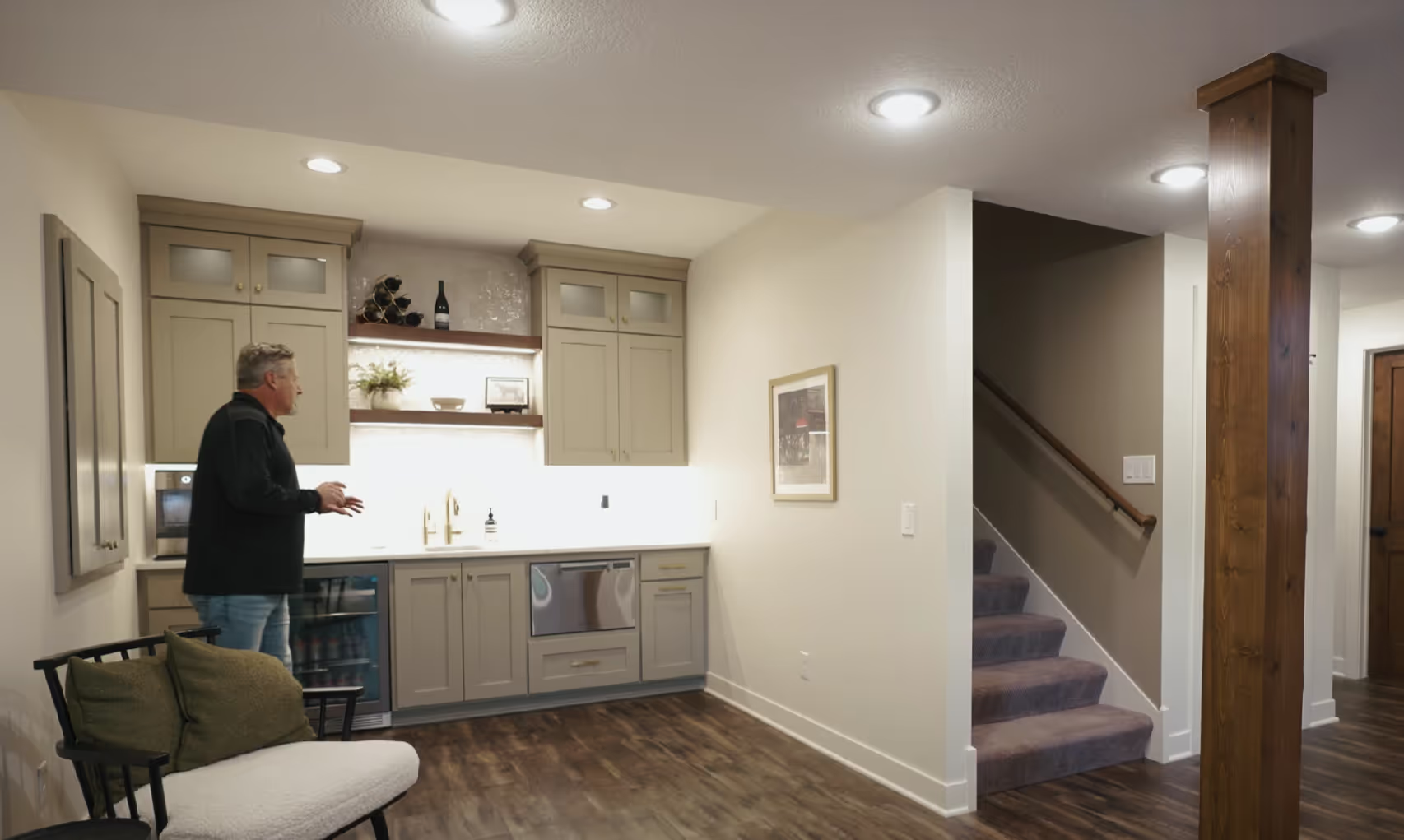
Best for: Narrow kitchen spaces that are long enough to accommodate an island between the parallel walls. Serious cooks who prioritize efficiency and want everything within arm's reach. This layout works brilliantly in basement finishing projects where we're creating a second kitchen or entertainment bar.
Key features: One wall typically houses the sink and dishwasher, while the opposite wall contains the cooktop and oven. The island between them provides prep space and often includes a second sink. This creates multiple stations where different people can work simultaneously without collision.
Traffic flow considerations: The galley with island requires at least 48 inches between the island and each wall—preferably 54 inches if you want two people to comfortably work back-to-back. Avoid placing the galley in a main traffic path through your home.
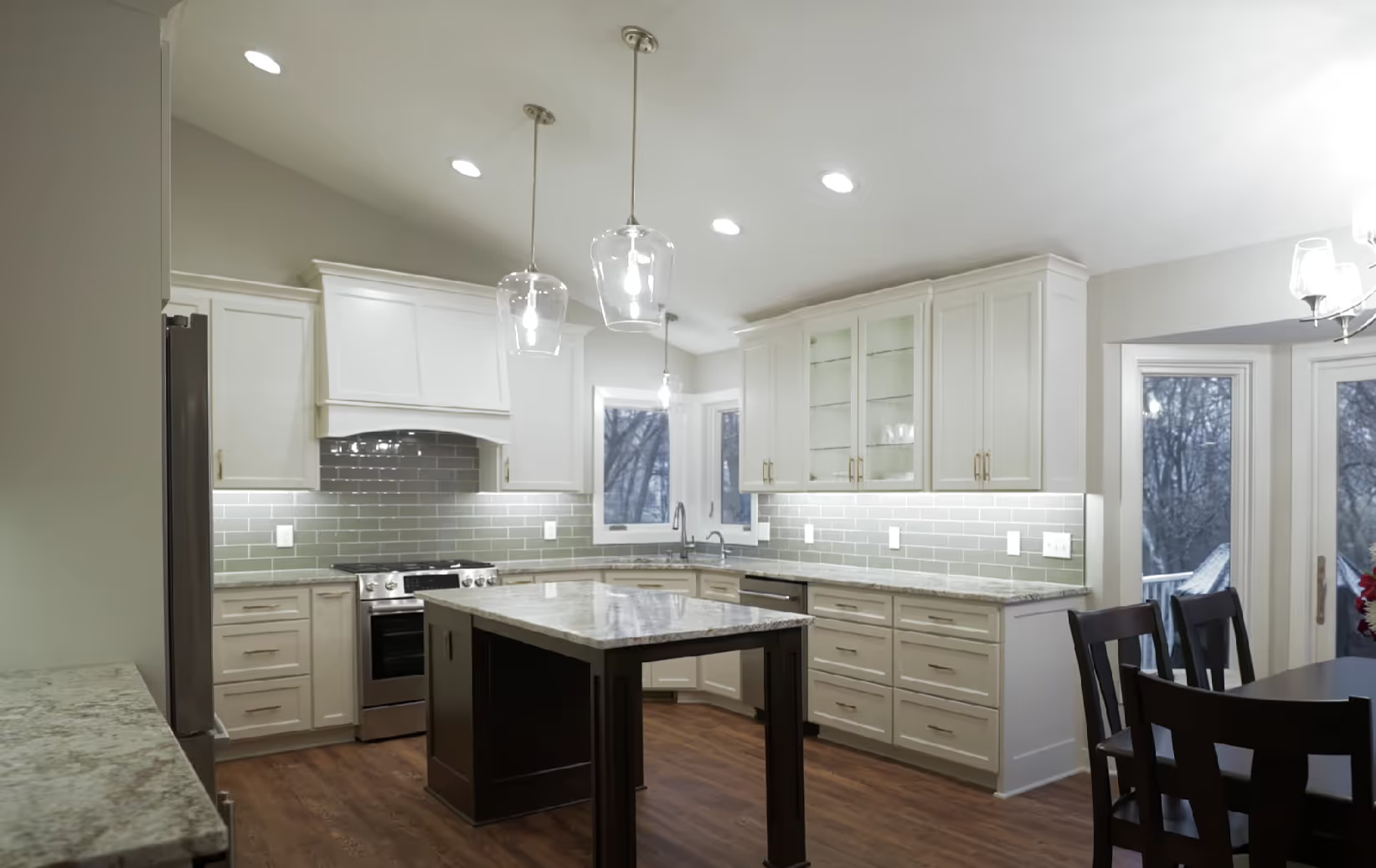
This remains the most popular layout in South Metro kitchen remodels, and for good reason—it provides exceptional flexibility and accommodates a substantial island that becomes the kitchen's focal point.
Best for: Most medium to large open concept kitchens. Families who entertain frequently and want the kitchen to feel spacious. This layout works in nearly any kitchen configuration and is the default starting point for most of our kitchen designs.
Key features: Two adjacent walls form the "L," typically with the sink on one leg and the cooktop on the other. The island provides the substantial prep and serving space that makes modern kitchens work. The island can include seating, a prep sink, beverage refrigerator, or simply massive counter space for multiple cooks.
Traffic flow considerations: The beauty of the L-shape is that it leaves two sides completely open, allowing natural traffic flow around the island. We position the L to shield the working kitchen from the main living areas while keeping sight lines open for supervision and conversation.
Rather than starting with a geometric pattern, we often begin with zone requirements and let the layout emerge naturally from your family's needs and your space's constraints.
This approach starts with understanding how you actually use your kitchen:
We then create dedicated zones for each activity, positioned to minimize interference. The zones connect logically—prep zones near storage, cooking zones near serving areas—but the overall pattern is customized to your home and habits rather than forced into a predetermined shape.
This is where our in-house design services deliver exceptional value. We don't arrive with a predetermined template. We design your kitchen specifically for how you cook, how you entertain, and how your family naturally gathers.
After 25+ years designing and building kitchens throughout the South Metro, we've seen recurring layout mistakes that even expensive kitchens suffer from:
Mistake #1: Treating the island as an afterthought. Many homeowners design the perimeter cabinets first and then squeeze in whatever island space remains. This backwards approach almost always results in islands that are too small or poorly positioned. We design the island first—determining its ideal size and location—and then fit the perimeter cabinets around it.
Mistake #2: Ignoring the landing zone principle. Every appliance and sink needs landing space—counter area immediately adjacent for setting down hot dishes, grocery bags, or dirty pots. Refrigerators need 15 inches of landing space on the handle side. Ranges need 15 inches on either side. Sinks need 24 inches on one side, 18 inches on the other. We see beautiful kitchens rendered nearly useless because these landing zones don't exist.
Mistake #3: Underestimating storage needs. Open shelving looks beautiful on Instagram, but most families need substantial closed storage for the reality of everyday kitchen items. We guide clients toward a balance—some open shelving for visual interest and frequently accessed items, but primarily closed cabinets that hide the inevitable clutter of real life.
Mistake #4: Forgetting about the "messy zone." Every kitchen needs a designated area for dirty dishes between cooking and dishwasher loading. Without this, dishes pile up on your beautiful counters. We typically create a deep prep sink area that serves double duty—cutting board workspace during cooking, dish staging area after meals.
Mistake #5: Designing for how you wish you cooked, not how you actually cook. That professional range looks impressive, but if you're heating up frozen pizza three nights a week, you don't need six burners and a griddle. We help clients distinguish between genuine needs and aspirational purchases that will never see use.
When South Metro homeowners work with us for their kitchen remodel, our design process focuses on understanding your actual kitchen habits before we draw a single layout line.
We start every kitchen project with extensive discovery conversations. This isn't about selecting cabinet finishes—that comes later. Discovery is about understanding:
These conversations often reveal insights that dramatically affect layout decisions. Maybe you make coffee before breakfast daily, so the coffee maker should be completely separate from the main cooking zone to avoid morning bottlenecks. Maybe your kids do homework at the kitchen counter, so we need to design a dedicated zone with electrical outlets and task lighting away from cooking activities.
Armed with this understanding, our in-house design team creates multiple layout options. We're not trying to sell you on one predetermined solution—we're showing you different approaches, each with distinct advantages.
One layout might maximize counter space for a serious home baker. Another might prioritize seating for a family who eats every meal together. A third might create distinct cooking and entertaining zones for frequent party hosts.
We present these options with clear explanations of the trade-offs. Every design decision is a choice between competing priorities, and we help you understand what you're gaining and sacrificing with each option.
Most clients combine elements from different layout options as we refine the design. Maybe you love the island size from option A, the cooktop placement from option B, and the pantry configuration from option C. This iterative process continues until we land on a design that genuinely excites you—not just aesthetically, but functionally.
This is where working with a design-build contractor delivers tremendous value. Our designers understand construction realities. We're not creating beautiful renderings that prove impossible to build or exceed your budget. We're designing within your specific constraints—your home's structure, your budget, and Minnesota building codes.
Here's something many South Metro homeowners don't expect: your kitchen remodel pricing tier often includes updates beyond the kitchen itself.
Our Tier 3 and Tier 4 kitchen remodels ($105,000-$120,000+) incorporate main level updates throughout your home—new flooring in the kitchen, dining room, family room, and foyer; painting of ceilings and walls; upgraded electrical circuits. Why? Because once your kitchen is transformed, the adjacent spaces look dated by comparison.
This comprehensive approach creates a cohesive design throughout your main level rather than an isolated kitchen that looks disconnected from the rest of your home. It's the difference between a renovation and a transformation.
Let me share a recent project that perfectly illustrates this shift from triangle thinking to zone-based design.
Tom and Jennifer from Rosemount came to us frustrated with their kitchen. Built in 2003, it followed the work triangle perfectly—sink, stove, and refrigerator formed a tight, efficient triangle. On paper, it should have worked beautifully.
In reality, their kitchen created daily conflict. Tom and Jennifer both worked from home and tried to cook together in the evenings. But the efficient triangle meant they were constantly in each other's way. When their teenage son wanted to grab something from the refrigerator during meal prep, he had to navigate between both parents. The kitchen island was tiny—barely enough room for one person to chop vegetables, let alone serve as a gathering spot.
Our design solution broke free from the triangle concept entirely:
We created a massive island (10 feet long, 4 feet deep) that became the kitchen's anchor. This island provided workspace for two people to prep simultaneously, electrical outlets for stand mixers and food processors, and seating for four on the living room side.
We separated the cooking zones. The main cooktop stayed on the perimeter wall with substantial landing space on both sides. But we added a second prep zone on the island itself with its own small sink. Now Tom could be grilling on the cooktop while Jennifer prepped salads on the island—no interference.
We repositioned the refrigerator to the edge of the kitchen, accessible without entering the main work zone. Their son could grab milk without navigating between his parents during meal prep.
We created a dedicated coffee and beverage station on the opposite wall, with a beverage refrigerator, coffee maker, and microwave. Morning routines no longer collided with dinner preparation.
The result? Tom and Jennifer can cook together comfortably, their kitchen accommodates their son's teenage eating habits without conflict, and weekend gatherings feel natural with guests around the island rather than awkwardly crowding into what was once a tight triangle.
This is what modern kitchen layout design achieves—spaces that enhance how families actually live rather than forcing them to adapt to outdated efficiency concepts.
One often-overlooked aspect of kitchen layout is how storage strategy affects workflow. The traditional work triangle focused on the big three appliances but ignored how storage placement impacts efficiency.
Modern kitchen layouts group storage with relevant work zones:
Prep zone storage: Cutting boards, knives, mixing bowls, and measuring tools should be stored within arm's reach of your main prep counter. We typically design deep drawers rather than base cabinets near prep areas—drawers provide better visibility and access to nested bowls and stacked tools.
Cooking zone storage: Pots, pans, cooking utensils, oils, and spices should be within easy reach of the cooktop. Pull-out drawers for pots and pans work far better than traditional cabinets where you have to crouch and dig through stacks to find what you need.
Cleaning zone storage: Dish soap, cleaning supplies, and trash/recycling should be positioned near the sink. We increasingly design drawer-style trash cabinets that make trash disposal more convenient while keeping bins hidden.
Serving zone storage: Dishes, glassware, and flatware should be stored near where you set the table, not necessarily near where you cook. In open concept kitchens, we often position dish storage on the dining room side of the island for easy table setting.
This storage zoning eliminates countless steps during meal preparation. Rather than walking across the kitchen to retrieve items, everything you need is within your immediate work area.
Every kitchen layout must address pantry storage, and the options dramatically affect overall functionality:
Walk-in pantries provide exceptional storage capacity and can hide small appliances, bulk purchases, and overflow items. However, they require 25-40 square feet of space and position all your food storage behind a door—out of sight and often out of mind, leading to forgotten items and waste.
Pantry cabinets with pull-out shelves integrate into your kitchen layout, keeping food storage visible and accessible. They take up less floor space but offer less total capacity than walk-ins. We typically design floor-to-ceiling pantry cabinets (7-8 feet tall) with rollouts at every level for maximum access.
Butler's pantries (also called sculleries) provide the best of both worlds for larger kitchen projects. They function as an extension of the kitchen with additional counter space, sink, and storage, but close off from the main entertaining space. Caterers love these, as do families who want extra prep space that doesn't need to stay pristine.
The right pantry solution depends on your cooking style and storage needs—not on trends or what looks impressive. We guide South Metro homeowners through this decision based on how they actually shop and cook.
Today's kitchen layouts must accommodate technology that didn't exist when the work triangle was designed:
Charging stations and device storage: Families need designated spots for tablets displaying recipes, phones, and laptops. We typically build shallow drawers with integrated outlets and USB ports—devices charge out of sight rather than cluttering countertops.
Smart appliance considerations: WiFi-connected appliances need reliable connectivity. We work with homeowners to ensure their kitchen layout positions smart appliances within good WiFi range or includes mesh network extenders.
Multiple workstations: Many families need workspace for both meal prep and other activities (homework, work-from-home, online shopping). Modern layouts create distinct zones with appropriate seating, task lighting, and outlets for these different activities.
Voice control integration: Smart speakers and displays increasingly control kitchen functions. We position these for optimal voice recognition while keeping them away from high-heat cooking zones.
If you're considering a kitchen remodel in Lakeville, Prior Lake, or anywhere in the South Metro, understanding the investment required for a properly designed kitchen helps set realistic expectations.
Our complete design process typically spans 3-6 weeks:
This thorough design process is why we avoid the costly change orders and mid-project surprises that plague homeowners who skip professional design. You'll know exactly what you're getting before any demolition begins.
Modern, zone-based kitchen layouts align with our pricing tiers:
Tier 1 ($75,000-$90,000): Smaller kitchens maintaining the existing layout. While we keep the footprint, we can still dramatically improve workflow by repositioning the island, upgrading to better storage solutions, and creating distinct zones within the existing space.
Tier 2 ($90,000-$105,000): Medium kitchens with possible wall removal. This investment level allows us to open up spaces, create better sight lines, and substantially improve traffic flow. We can remove non-load-bearing walls, expand islands, and create the open concept layouts that work so well for modern families.
Tier 3 ($105,000-$120,000): Large kitchens with possible load-bearing wall removal, premium finishes, and main level updates. This tier typically involves significant layout restructuring, creating the ideal zones for your family's specific needs without constraint from the existing footprint.
Tier 4 ($120,000+): Extra-large kitchens with complete layout restructuring, including relocation of plumbing, comprehensive electrical upgrades throughout the main level, and premium materials throughout. This investment creates truly customized layouts that perfectly match your lifestyle.
Remember: kitchen remodel costs reflect not just materials and labor, but the design expertise that creates layouts specifically for how you live.
The kitchen work triangle served its purpose in a different era with different needs. Today's South Metro families deserve kitchen layouts designed for how they actually live—multiple cooks working simultaneously, open concept spaces that facilitate family connection, zones that accommodate various activities beyond just cooking.
The question isn't whether your sink, stove, and refrigerator form a perfect triangle. The question is: Does your kitchen enhance your lifestyle or create daily frustration? Does it allow your family to naturally gather and connect, or does it force awkward workarounds for basic activities?
At Country Creek Builders, we've spent 25+ years helping South Metro homeowners answer these questions. Our in-house design services don't just create beautiful spaces—we design kitchens that genuinely work for how modern families live, cook, and gather.
Your kitchen should spark joy every time you walk into it. It should facilitate connection rather than frustration. And it should be designed specifically for your family's needs—not forced into an outdated efficiency model from eight decades ago.
If your current kitchen creates bottlenecks during meal prep, if multiple cooks can't work comfortably together, if you're constantly apologizing for your layout when hosting guests—it's not your fault. Your kitchen was designed using principles that no longer match how families live.
Ready to explore what a properly designed, zone-based kitchen could mean for your South Metro home? We'd love to show you how modern layout principles could transform your daily life.
Contact Country Creek Builders to schedule your no-pressure kitchen design consultation. Let's create a kitchen that actually works for how you live—not how people cooked in 1949.
We're based out of the South Metro Twin Cities, and we serve both