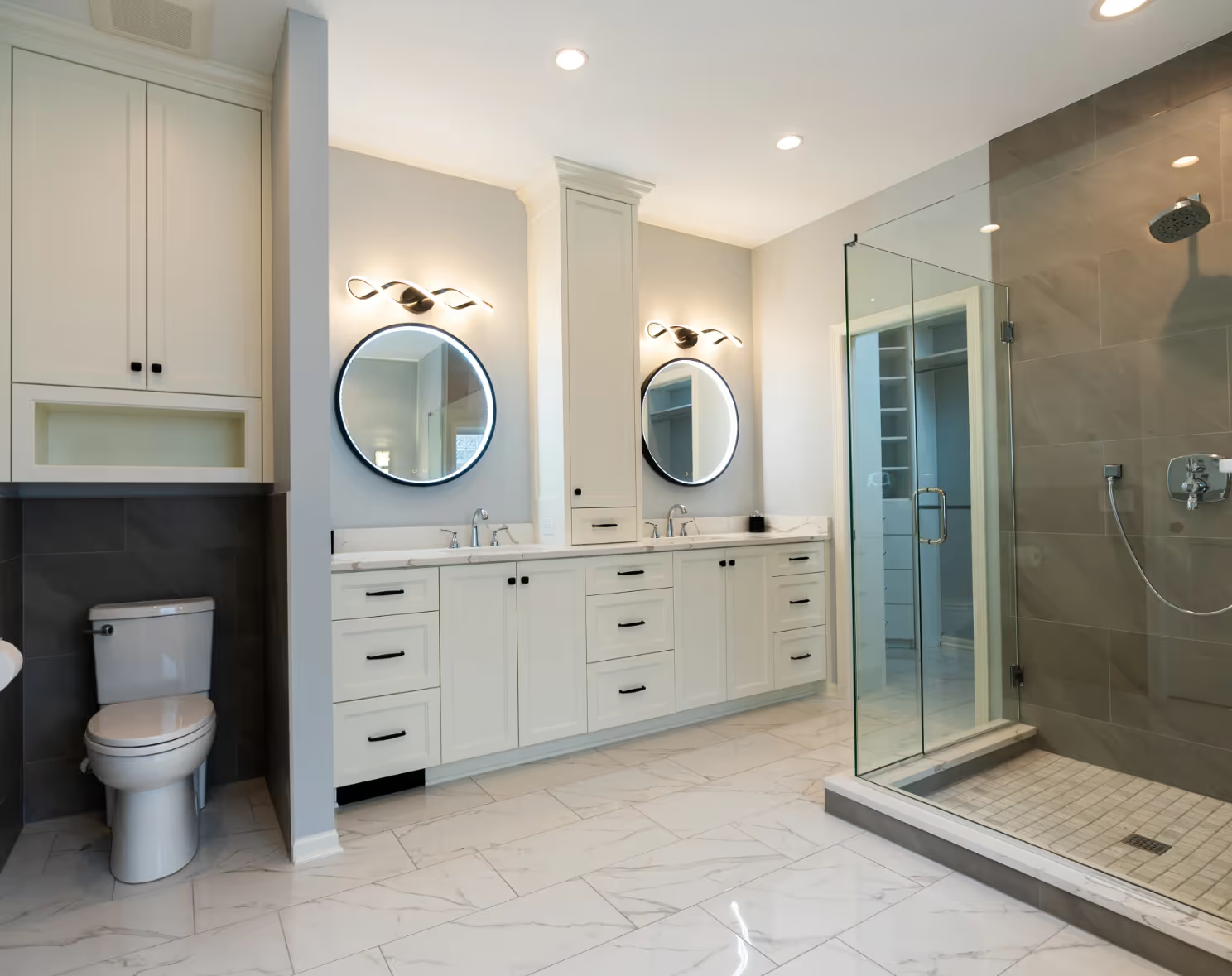
The experts at Country Creek Builders explain why kitchen renovations should include main level upgrades as well.
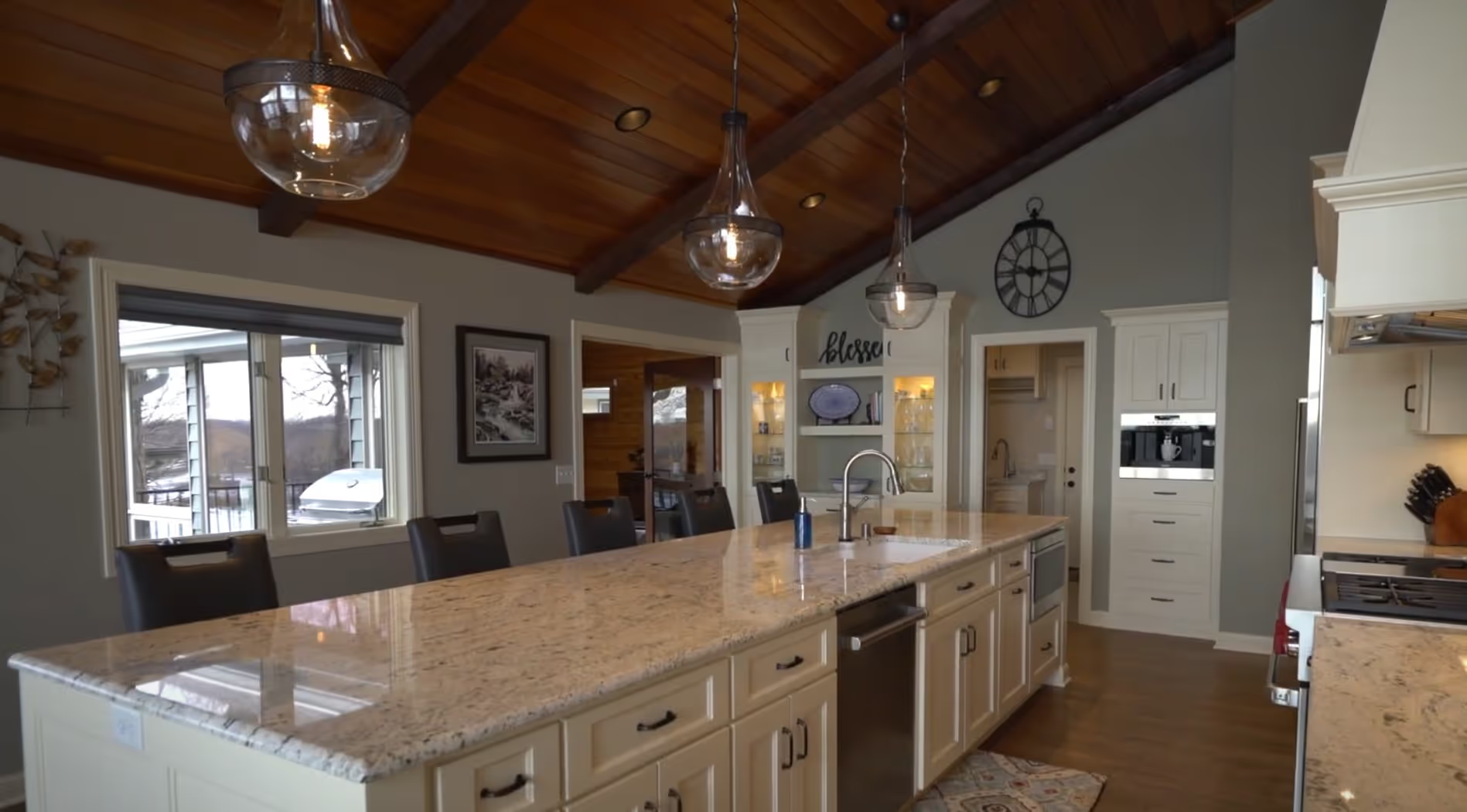
You've been planning your kitchen remodel for months. You've saved diligently, you've collected design inspiration on Pinterest, and you're ready to transform your outdated kitchen into the culinary workspace and gathering spot you've always dreamed about.
Then comes the moment when your contractor walks through your South Metro home and explains that your kitchen remodel pricing tier should really include updates beyond just the kitchen itself—new flooring in the dining room and family room, painting throughout the main level, electrical upgrades in adjacent spaces, and possibly new trim and doors.
Your first reaction might be frustration: "Wait, I'm paying to remodel my kitchen. Why are we talking about the family room?"
It's a fair question, and one we address frequently with homeowners throughout Lakeville, Apple Valley, Prior Lake, and the South Metro. After 25+ years and 586+ completed projects, we've learned a critical truth about kitchen remodeling: the most successful projects don't stop at the kitchen threshold. They transform your entire main level into a cohesive, beautiful space that feels intentionally designed rather than obviously remodeled.
This comprehensive guide explains why your kitchen remodel budget should include main level updates, what those updates typically involve, how they affect your total investment, and—most importantly—why they deliver dramatically better results than an isolated kitchen renovation.
Picture this scenario: You invest $95,000 in a beautiful new kitchen. Custom cabinetry in a sophisticated gray finish, stunning quartz countertops, a gorgeous tile backsplash, new hardwood-look LVT flooring, and state-of-the-art appliances. The kitchen itself is absolutely beautiful—exactly what you envisioned.
But when you step back and look at your main level as a whole, something feels off. Your stunning new kitchen now makes your adjacent dining room look shabby by comparison. The old oak flooring in the dining room clashes with the modern LVT in the kitchen, creating an awkward transition. Your family room, visible from the kitchen in your open-concept layout, suddenly looks dated with its builder-beige walls that worked fine next to your old kitchen but look dingy next to the fresh gray-and-white palette you've just installed.
Guests arriving for your "kitchen reveal" party can't help but notice the contrast. They compliment your kitchen enthusiastically, but their eyes keep drifting to the dated dining room and worn family room finishes. The "wow factor" you hoped for is diminished because your beautiful new kitchen exists in isolation rather than as part of a cohesive design.
This is the fundamental problem with kitchen-only remodels: they create a jarring contrast that actually makes adjacent spaces look worse than they did before.
Dated finishes become more obvious. When your kitchen had dated finishes, those same dated finishes elsewhere on your main level seemed fine—everything was roughly the same era and condition. Once you've introduced contemporary, high-quality finishes in one area, every dated element in adjacent spaces suddenly looks worse by comparison.
Color palettes clash. Your new kitchen likely features a modern color scheme that doesn't coordinate with the existing paint colors in surrounding rooms. That oak honey-colored trim that seemed fine with your old oak cabinets now clashes with your new gray cabinets and white trim.
Quality differences are glaring. High-quality kitchen finishes next to builder-grade materials in adjacent spaces create an obvious quality gap. It's like wearing a tuxedo top with sweatpants—technically you're dressed, but the mismatch is all anyone notices.
Open floor plans amplify the problem. If you have an open-concept layout (and most South Metro homes built in the last 20 years do), your kitchen, dining room, and family room are all visible simultaneously. There's no door closing off the kitchen—the contrast is constantly visible from every angle.
Flooring transitions look forced. When you install new kitchen flooring that stops abruptly at the doorway, the transition to different flooring in adjacent rooms is jarring. Natural sight lines in open concepts mean you're constantly looking at the seam between old and new materials.
This isn't a minor aesthetic quibble—it fundamentally affects how you feel about your investment. You've spent $75,000-$150,000 on a kitchen remodel, but instead of loving your entire main level, you're acutely aware of everything that still needs updating. The remodel that should have made you feel satisfied has instead highlighted all your home's remaining dated elements.
When we discuss main level updates as part of your kitchen remodel, we're talking about specific improvements that create cohesive design throughout your main floor living spaces. Let's detail exactly what this involves.
The most visible main level update involves extending your new kitchen flooring into adjacent spaces—typically the dining room, family room, and entry foyer.
Why this matters: Flooring creates visual continuity. When the same floor material flows throughout your open-concept main level, spaces feel connected and intentional. When flooring changes at every doorway, spaces feel chopped up and obviously remodeled in phases.
What this involves: If you're installing LVT in your kitchen, we extend it through the dining room, family room, and foyer—anywhere that's visually connected to the kitchen. This creates a cohesive main floor that feels like one unified space rather than a collection of rooms.
Cost impact: Extending flooring from a medium kitchen (200 sq ft) to include dining room (150 sq ft), family room (300 sq ft), and foyer (100 sq ft) adds approximately 750 square feet of flooring. At $8-$12 per square foot installed for quality LVT, this adds $6,000-$9,000 to your project.
That sounds like a lot—until you consider that this flooring will eventually need replacement anyway, and doing it during your kitchen remodel saves money compared to a separate future project. More importantly, the visual cohesion this creates dramatically improves how your entire main level feels.
Fresh paint throughout your main level creates visual harmony and makes everything feel new rather than highlighting one updated area.
Why this matters: Your new kitchen likely features contemporary colors—cool grays, warm whites, or sophisticated dark tones. These fresh colors make your existing paint look dingy by comparison, even if that paint was fine before. Painting throughout the main level coordinates colors, updates trim, and refreshes ceilings that have yellowed over years.
What this involves: Painting walls and ceilings in your kitchen, dining room, family room, hallways, and foyer. Often this includes trim work—either painting or staining trim to coordinate with your new kitchen's aesthetic. Some projects include updating baseboards and door casings to wider, more contemporary profiles that match the kitchen's style.
Cost impact: Painting 2,000-3,000 square feet of main level space (walls and ceilings) typically costs $4,000-$8,000 depending on ceiling heights, number of colors, and prep work required. This assumes standard 8-9 foot ceilings; higher ceilings increase costs. Updating trim (wider baseboards, new door casings) adds $3,000-$6,000 for a typical main level.
Again, this work will eventually need doing regardless. Coordinating it with your kitchen remodel ensures color harmony and saves money versus doing it as a separate project later.
Modern kitchens demand significant electrical capacity—and often your entire main level electrical system needs updating to handle these new demands.
Why this matters: Today's kitchen appliances, outlets, and lighting require far more electrical capacity than homes built 15-30 years ago were designed to handle. Your electrical panel might not have capacity for all your new kitchen circuits without upgrades. Additionally, once you're opening walls for kitchen electrical work, upgrading outlets and circuits throughout your main level costs relatively little additional labor.
What this involves: Upgrading your electrical panel if current capacity is insufficient (common in homes built before 2000), adding circuits throughout the main level to meet current code requirements, updating outlets to tamper-resistant or USB-equipped models, and ensuring proper GFCI and AFCI protection throughout.
Cost impact: Electrical panel upgrades (if needed) cost $2,000-$4,000. Upgrading circuits and outlets throughout the main level during your kitchen remodel adds $2,000-$5,000—but would cost $5,000-$8,000 as a standalone project because you'd need to access walls that are already open during kitchen remodeling.
Your new kitchen deserves lighting that matches its quality—and extending that lighting upgrade throughout your main level creates consistent ambiance.
Why this matters: If your kitchen features beautiful recessed lighting, under-cabinet LEDs, and pendant fixtures while your adjacent family room has the original builder-grade dome light from 2003, the quality difference is stark. Coordinating lighting throughout your main level ensures every space feels equally considered and well-designed.
What this involves: Updating ceiling fixtures in dining rooms and family rooms, adding dimmers throughout the main level, installing additional outlets and switches as needed, and potentially adding accent lighting or updated ceiling fans.
Cost impact: Lighting updates for main level spaces adjacent to the kitchen typically add $2,000-$5,000 to your project depending on the number and type of fixtures.
If you're updating kitchen trim profiles (wider baseboards, taller door casings), stopping at the kitchen doorway creates obvious transitions. Extending trim updates creates visual flow.
Why this matters: Modern kitchens increasingly feature 5-6 inch baseboards and wider door casings (3.5-4 inches) compared to standard builder-grade 3 inch baseboards and 2.25 inch casings. This updated trim is part of what makes the kitchen feel custom and high-quality. But when this trim stops abruptly at the kitchen entrance, the transition is obvious and awkward.
What this involves: Extending your new trim profiles throughout the main level, potentially updating interior doors to more contemporary styles, and painting or staining all trim for consistency.
Cost impact: Extending trim updates throughout a main level typically adds $3,000-$8,000 depending on the number of doorways, the amount of baseboard, and whether you're updating doors themselves or just trim.
When walls are open for your kitchen remodel, addressing long-standing issues throughout your main level costs relatively little additional money.
What this might include: Adding insulation to exterior walls, updating outdated wiring, adding network cables or conduit for future technology, moving or upgrading thermostats, addressing minor plumbing issues, or improving HVAC efficiency.
Why this matters: These improvements would require accessing walls—meaning cutting into drywall, then patching and painting. During a kitchen remodel when walls are already open, the additional cost is just materials and incremental labor rather than the full cost of creating and repairing wall access.
At Country Creek Builders, our kitchen remodel pricing tiers reflect the increasing importance of main level updates as project scope and investment increase.
Tier 1 kitchen remodels maintain the existing layout, working within your current footprint. These smaller projects might include:
Main level updates are minimal because Tier 1 projects typically occur in smaller kitchens or in homes where the adjacent spaces are already in good condition. The visual contrast created by a modest update is less pronounced than with larger renovations.
Tier 2 remodels might remove non-load-bearing walls, create better flow, and include higher-quality finishes. Main level updates typically include:
At this investment level, the contrast between updated and non-updated spaces becomes more apparent, making selective main level updates worthwhile.
Tier 3 remodels involve significant layout changes, possible load-bearing wall removal, and premium finishes throughout. Main level updates are nearly always included:
Our Tier 3 description explicitly includes "new flooring in kitchen, dining room, family room, and foyer" along with "painting of kitchen ceiling, kitchen walls, dining room, family room, and foyer; additional painting as needed." This comprehensive approach creates cohesive design throughout your main level.
Tier 4 represents complete kitchen restructuring with premium materials and comprehensive main level updates:
Tier 4 projects essentially create a new main level, not just a new kitchen. The line between "kitchen remodel" and "main level renovation" blurs because we're transforming your entire primary living space into a cohesive, beautifully designed environment.
Let's address the practical question every homeowner asks: if I'm spending an extra $15,000-$35,000 on main level updates beyond my kitchen, will I recoup this investment?
Kitchen remodels in the South Metro typically return 60-75% of their cost at resale. So if you invest $100,000 in your kitchen, you might recoup $60,000-$75,000 when you sell.
Do main level updates improve this return? Not dramatically in direct dollar-for-dollar recouping. If you spend an additional $20,000 on main level updates, you won't necessarily see an additional $20,000 in home value.
However, this direct math misses the bigger picture.
Faster sale time: Homes with cohesive, updated main levels sell significantly faster than homes with obvious piecemeal updates. In the competitive South Metro market, homes that show well typically receive offers within 2-4 weeks, while dated or inconsistent homes linger for months.
Broader buyer appeal: A kitchen-only remodel might appeal to buyers who can overlook dated adjacent spaces, but a fully updated main level appeals to far more buyers—particularly those who aren't prepared for additional renovation projects.
Higher perceived value: Buyers don't analyze individual room costs—they form holistic impressions. A home with a beautiful kitchen and dated family room creates the impression of deferred maintenance and incomplete projects. A home with a cohesive, updated main level creates the impression of meticulous care and quality throughout.
Reduced buyer negotiations: When adjacent spaces are dated, buyers use this as negotiation leverage. "The kitchen is nice, but we'll need to replace all the flooring and repaint everything—let's reduce the price by $15,000." Main level updates eliminate this negotiating point.
Photography and staging advantages: When listing your home, professional photos of a cohesive, beautiful main level create dramatically more powerful marketing than photos that focus tightly on your kitchen to avoid showing dated adjacent rooms.
Here's what the pure financial ROI analysis misses entirely: the value you derive from actually living in your remodeled home for the years before you sell.
If you're planning to stay in your South Metro home for 5-10+ years after your kitchen remodel, the quality of your daily living experience matters far more than the eventual resale ROI. And living with a beautiful kitchen that makes adjacent spaces look shabby is a daily source of mild disappointment—the opposite of what your investment should deliver.
Daily satisfaction: Coming home to a main level that feels cohesive, fresh, and intentionally designed brings satisfaction every single day. This emotional ROI is hard to quantify but profoundly affects your quality of life.
Pride in your home: When friends or family visit, you want to feel proud of your entire main level—not find yourself apologizing for dated spaces adjacent to your new kitchen.
Reduced future project stress: By addressing your main level comprehensively during one renovation, you avoid the stress and disruption of future projects. Living through one renovation is challenging enough; living through multiple sequential renovations is exhausting.
Consistency with your lifestyle: If you're investing $90,000-$150,000 in a kitchen remodel, you're likely at a life stage where you have the resources to create a home that truly reflects your taste and supports your lifestyle. Stopping at the kitchen threshold doesn't align with this goal.
Let's compare actual costs for a typical South Metro kitchen remodel, showing both the isolated approach and the comprehensive approach:
Kitchen-Only Approach:
Future costs (within 3-5 years):
Total cost: $107,500 spread across multiple projects over years
The comprehensive approach costs $4,000 more total—but delivers immediate cohesion, avoids multiple future construction projects, and ensures all materials coordinate rather than trying to match discontinued products years later.
More importantly, you live with beautiful, cohesive main level from day one rather than living with the contrast for years while saving for the next project.
Beyond costs and ROI, main level updates deliver something isolated kitchen remodels cannot: true design integration throughout your primary living space.
When Country Creek Builders' in-house design team approaches a kitchen with main level updates, we're thinking holistically about your entire primary living space:
Color palette development: We select kitchen colors knowing they'll extend throughout your main level. This isn't just about the kitchen looking good in isolation—it's about creating a palette that flows beautifully from kitchen to dining room to family room and beyond.
Material coordination: Your kitchen countertops, backsplash, and cabinet finishes inform material selections for the entire main level. We might pull an accent color from your quartz countertop into dining room wall color, or coordinate your kitchen cabinet stain with wood tones in adjacent spaces.
Architectural details: Crown molding profiles, baseboards heights, door styles, and hardware finishes are selected to work throughout the main level rather than changing abruptly at the kitchen boundary.
Lighting design: We design layered lighting strategies that work cohesively throughout your main level—dimming systems that control kitchen, dining, and family room lighting in coordinated scenes; fixture styles that complement each other rather than competing.
Traffic flow and sight lines: We position elements knowing what will be visible from various locations throughout your main level. That beautiful kitchen island isn't just designed for kitchen functionality—it's positioned and styled knowing it will be viewed from your family room and dining room as well.
This holistic design approach creates results that simply aren't possible with isolated kitchen-only remodels.
This comprehensive approach is especially critical in open-concept homes—which includes the majority of South Metro residences built in the last 20 years.
In open concepts, your kitchen, dining room, and family room are all visible simultaneously. There are no walls or doors separating these spaces—just visual flow from one zone to another. This makes design cohesion not a luxury but a necessity.
Standing in your family room, you see the kitchen, dining area, and foyer all at once. If materials, colors, and quality levels vary dramatically between these spaces, the disconnect is constantly apparent.
Conversely, when these spaces are designed as a unified whole—coordinated colors, flowing materials, consistent quality—the result is a main level that feels expansive, intentional, and beautifully designed.
We've made a strong case for including main level updates in your kitchen remodel budget. But there are legitimate scenarios where a kitchen-only approach makes sense:
If you've already painted your main level in the last 2-3 years, already replaced flooring in your dining and family rooms, and your trim and doors are contemporary and in good condition, there's no reason to redo this work simply because you're remodeling your kitchen.
In this scenario, the key is ensuring your new kitchen design coordinates with your existing main level finishes. Bring paint chips, flooring samples, and photos to your design consultations so your designer can create a kitchen that complements what's already there.
If you've saved $80,000 for a kitchen remodel and genuinely cannot stretch your budget further, a kitchen-only approach is better than not remodeling at all or going into debt you can't comfortably manage.
However, we'd encourage you to consider whether waiting another year to save additional funds might deliver dramatically better results. Sometimes delaying your project to do it comprehensively is wiser than rushing into an isolated renovation that will immediately highlight the need for additional work.
If you're remodeling specifically to prepare your home for sale within 6-12 months, your primary goal is creating a beautiful, marketable kitchen that justifies your asking price. Adjacent spaces might not need comprehensive updates if they're in acceptable condition—buyers can paint and update floors themselves if needed.
However, even in this scenario, we'd recommend at least painting the main level to coordinate with your new kitchen. Fresh paint is inexpensive relative to its impact on buyer perception.
If your home has a traditional closed-off layout (kitchen is a separate room with doors), the contrast between your updated kitchen and adjacent spaces is less visually jarring. Closed doors provide natural transitions between updated and non-updated spaces.
Even in closed layouts, though, we'd typically recommend coordinating paint throughout the main level and extending flooring at minimum into your dining room if it's visually connected to the kitchen.
Including main level updates in your kitchen remodel affects your project timeline—but less than you might expect.
Including main level updates typically adds only 2-4 weeks to your project timeline. This is because much of the work happens concurrently (painters can work in adjacent rooms while your kitchen cabinets are being installed), and the incremental time is far less than if these were separate future projects.
More importantly, living through one 11-15 week renovation is dramatically less disruptive than living through a 10-week kitchen renovation followed by a future 3-4 week flooring project and then a future 2-week painting project. Three separate construction periods mean three times dealing with workers in your home, three times managing disruption, and three times paying mobilization costs.
At Country Creek Builders, our approach to kitchen remodeling naturally includes thinking about your entire main level from the beginning.
During initial consultations, we assess your entire main level—not just your kitchen. We're looking at:
We provide honest guidance about which main level updates will deliver the most value for your specific situation. Sometimes that means comprehensive updates throughout. Sometimes it means selective updates only in immediately adjacent spaces. And occasionally it means focusing on the kitchen alone because your main level is already in great condition.
Our kitchen remodel pricing tiers explicitly describe what's included regarding main level work:
This transparency helps you understand from the beginning what each investment level delivers, avoiding surprises during the design process.
Including main level updates in your kitchen remodel is easier when working with full-time employee craftsmen rather than juggling multiple subcontractors.
Our full-time team handles all aspects of your project—cabinets, electrical, plumbing, painting, flooring, trim. This means one consistent crew working throughout your main level rather than different subcontractors who might not coordinate well or maintain consistent quality.
You're not managing different contractor schedules or dealing with finger-pointing when something doesn't align properly. We take full responsibility for your entire project from kitchen to main level updates.
As you plan your kitchen remodel budget, consider these questions:
How long do you plan to stay in your home?
What's the current condition of your adjacent spaces?
Do you have open-concept layout?
What's your budget flexibility?
How do you feel about future projects?
What are your entertaining and lifestyle patterns?
Honest answers to these questions will guide you toward the right approach for your situation.
The fundamental question is whether you want a kitchen renovation or a main level transformation.
A kitchen renovation updates your kitchen, creating a beautiful space that might or might not coordinate well with adjacent areas. It focuses on one room in isolation.
A main level transformation reimagines your entire primary living space as a cohesive, beautifully designed environment where every space flows naturally into the next, where quality and finishes are consistent throughout, and where the result feels intentional rather than obviously piecemeal.
At Country Creek Builders, we believe the transformation approach delivers dramatically better results for most South Metro homeowners who are investing $90,000-$150,000 in kitchen remodeling.
Yes, it costs more upfront. Yes, it extends your timeline slightly. But the results—a main level you genuinely love rather than a beautiful kitchen that highlights dated adjacent spaces—justify these incremental increases for families planning to stay in their homes for years.
Your home should enhance your lifestyle, not limit it. A kitchen-only remodel might technically give you a better kitchen, but a comprehensive main level transformation gives you a better home.
Contact Country Creek Builders to schedule your consultation. Let's explore whether comprehensive main level updates make sense for your kitchen remodel—and if so, how to create a cohesive design throughout your primary living space.
After 25+ years transforming South Metro homes, we've learned that the most satisfied homeowners aren't those who spent the least—they're those whose results feel cohesive, intentional, and beautifully designed throughout.
Let's create that transformation together.
We're based out of the South Metro Twin Cities, and we serve both




.avif)
.avif)
.avif)

.avif)