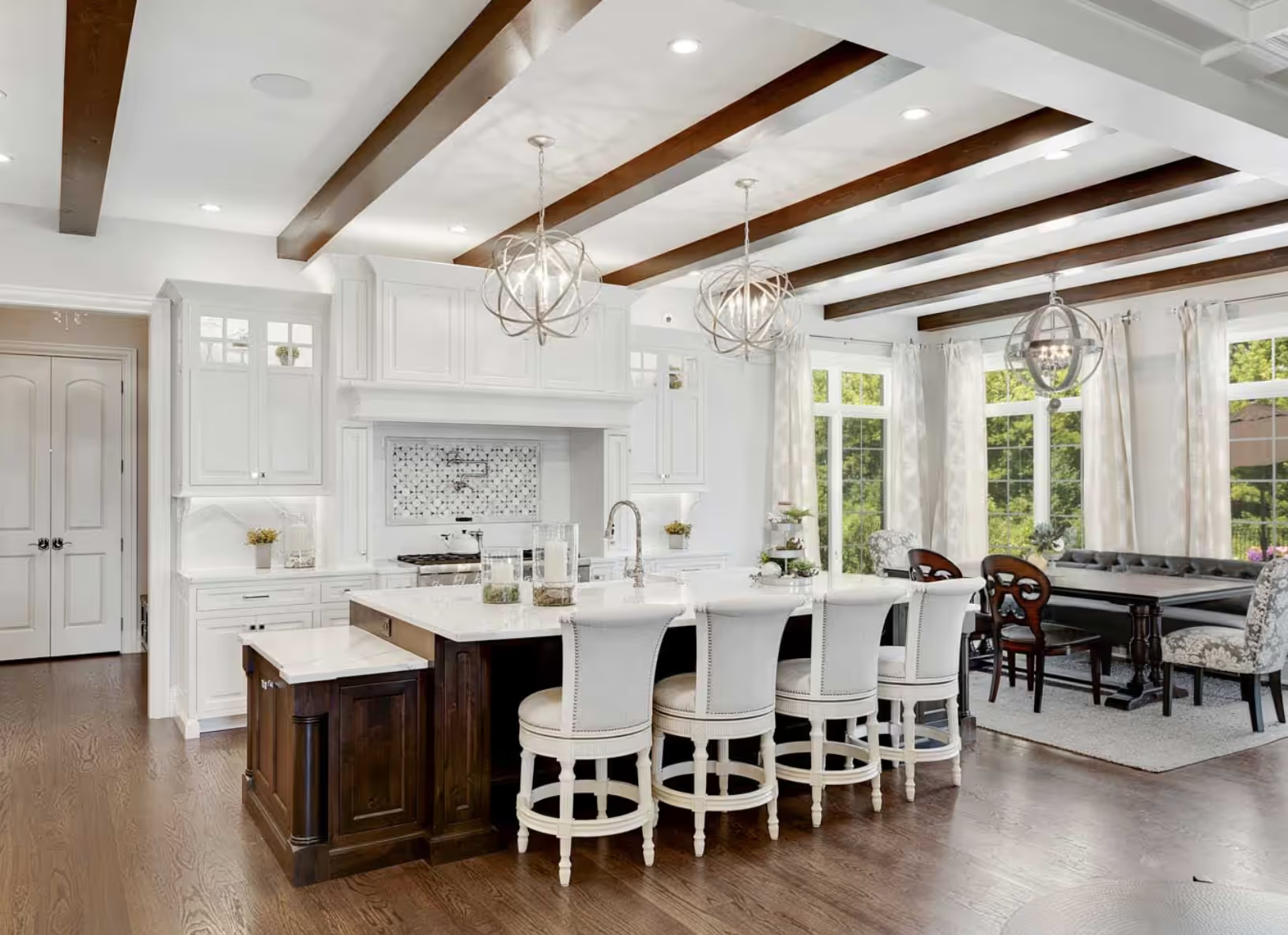
What can you expect to spend on a home addition in 2026? Consider these factors.

When Apple Valley and Rosemount homeowners love their neighborhood but need more space, home additions offer an attractive alternative to selling and moving. But one question dominates the decision-making process: "How much will this actually cost?"
Home addition costs vary dramatically based on multiple factors—addition type, size, foundation requirements, roof complexity, finishes, and your home's existing structure. Understanding these cost drivers helps you plan realistically and make informed decisions about whether adding on or moving up makes more sense for your situation.
As a design-build contractor serving the South Metro since 2000 with 586+ completed projects, we've helped countless homeowners expand their beloved homes. This comprehensive guide breaks down what to expect when planning home additions in Apple Valley, Rosemount, Lakeville, and surrounding communities in 2026.
Before diving into costs, consider why so many South Metro homeowners choose additions over relocation:
Your kids attend schools they love. You're minutes from work. Neighbors have become friends. Local restaurants, parks, and community connections took years to build. Moving means starting over.
Rather than compromising on someone else's floor plan and finishes, additions let you create exactly what you need. Want a master suite with a spa-like bathroom and massive walk-in closet? Design it precisely to your preferences.
Moving expensive involves realtor commissions (5-6% of home value), closing costs, moving expenses, and the emotional toll of packing and transitioning. A $400,000 home sale costs $24,000+ in realtor fees alone before other moving expenses.
Home prices throughout Lakeville, Apple Valley, Prior Lake, and Rosemount remain strong in 2026. Finding comparable homes with the additional space you need often costs $150,000-$300,000+ more than your current home's value—far exceeding most addition costs.
Limited inventory means accepting compromises on location, condition, or features. Building an addition lets you stay in the home and neighborhood you already love while getting exactly the space you need.
Different addition types carry distinct cost ranges based on complexity and requirements:
Master suite additions create private bedroom and bathroom spaces separated from main household activity. These additions typically include:
Cost drivers: Foundation work, roof integration with existing structure, plumbing for bathroom, electrical systems, HVAC extension, and premium bathroom finishes.
Size range: 400-700 square feet total
Cost per square foot: $300-$400+ depending on finishes and complexity
Kitchen additions expand cramped cooking and dining spaces, often creating open-concept flow between kitchen, dining, and living areas.
Typical features:
Cost drivers: Foundation, roof work, complete kitchen remodel within new space, structural modifications to existing home, and extensive finish work to blend old and new.
Size range: 150-400 square feet
Cost per square foot: $350-$500+ (higher per-square-foot cost due to kitchen complexity)
Adding living space creates room for growing families without completely renovating existing areas.
Common configurations:
Cost drivers: Foundation requirements, roof complexity, HVAC extension, window and door installations, and finish quality.
Size range: 200-500 square feet
Cost per square foot: $250-$400
Second-story additions maximize space without expanding your home's footprint—ideal for lots with limited yard space or setback restrictions.
Typical features:
Cost drivers: Structural evaluation of existing home (can it support additional weight?), roof removal and reconstruction, staircase installation, extensive HVAC and electrical work, and temporary relocation costs during construction.
Size range: 600-1,200 square feet
Cost per square foot: $200-$300 (lower per-square-foot cost since foundation work isn't required)
Four-season porches provide year-round usable space with extensive windows, insulation, and climate control.
Features:
Cost drivers: Foundation, extensive window installations, insulation requirements, HVAC extension, and interior finishing.
Size range: 150-300 square feet
Cost per square foot: $300-$450
Beyond addition type and size, several factors significantly impact your total investment:
Every ground-level addition requires a foundation. Minnesota's climate and soil conditions create specific foundation challenges:
Frost Footings: Minnesota building code requires foundations extending below the frost line (42 inches deep) to prevent frost heave damage. This depth requirement increases excavation and concrete costs compared to warmer climates.
Soil Conditions: Clay-heavy soils throughout the South Metro can shift and settle, requiring additional foundation preparation and potentially more robust footer designs.
Foundation Types:
Connecting your addition's roof to your existing home's roof creates significant complexity and cost variation:
Simple Roof Connections: When addition roof lines align naturally with existing roof slopes, integration is relatively straightforward ($8,000-$15,000 for typical additions).
Complex Roof Connections: Existing roof valleys, dormers, or complex angles require custom flashing, valley construction, and careful waterproofing ($15,000-$30,000+).
Roof Removal: Second-story additions require removing and reconstructing your existing roof entirely, dramatically increasing costs and complexity.
Minnesota's snow load requirements mean roofs must handle substantial weight. Proper engineering ensures your addition's roof—and the existing roof it connects to—meets current building codes.
Extending heating and cooling to your addition affects costs significantly:
Existing System Capacity: Can your current furnace and air conditioner handle additional square footage? If not, system upgrades or replacement add $8,000-$20,000+.
Ductwork Extension: Running ducts to the addition requires careful planning to maintain balanced airflow throughout your home ($3,000-$8,000 depending on distance and complexity).
Zone Control: Some homeowners add zone control systems allowing independent temperature settings for addition and existing spaces ($2,000-$5,000).
Minnesota Insulation Requirements: The state's energy code requires specific R-values for walls, ceilings, and floors. Meeting these standards adds to material costs but delivers long-term energy efficiency.
Matching your addition's exterior to your existing home involves both aesthetic and practical considerations:
Siding Match: Finding siding that matches your existing home's material, color, and style sometimes proves challenging, especially for older homes. Options include:
Brick or Stone: Matching existing brick or stone adds significant cost ($25-$45 per square foot) but creates seamless integration.
Roofing: New roof sections should match existing shingles in color and style. Discontinued shingles require choosing close alternatives or re-roofing visible sections for consistency.
Addition finishes range from basic to luxury, dramatically affecting total costs:
Flooring:
Trim and Doors:
Paint:
Bathroom Finishes (if included):Reference our detailed bathroom remodeling cost guide for comprehensive bathroom pricing information.
All home additions in Apple Valley, Rosemount, and surrounding South Metro communities require building permits.
Permit Costs: Typically 1-2% of total project cost ($1,500-$5,000 for most additions)
What Permits Cover:
Working with licensed contractors who handle all permitting protects you from liability and ensures code compliance. Never work with contractors who suggest skipping permits to "save money"—you're risking serious problems when selling your home.
Home additions present unique challenges that make design-build contractors especially valuable:
Connecting new construction to existing structures requires careful engineering and design. Issues include:
Design-build contractors address these questions during design, before construction begins. Separate designers and contractors often discover integration problems mid-project, causing expensive changes and delays.
When designers and builders work together from the start, cost estimates accurately reflect actual construction requirements. The design team knows what's realistically buildable and what various choices cost.
Separate designers sometimes create beautiful designs that prove prohibitively expensive or structurally infeasible when contractors review them. This disconnect leads to redesigns, delays, and budget frustration.
One company handles both design and construction, eliminating finger-pointing when challenges arise. If structural issues emerge, the same team that designed the solution builds it. Communication happens instantly within one organization rather than through back-and-forth between separate companies.
Because design-build contractors design everything before providing quotes, they know exactly what's required to build your addition. This eliminates the "unforeseen circumstances" and change orders that plague projects where contractors build someone else's designs.
Country Creek Builders has provided in-house design services for all our projects throughout 25+ years in business. This integration enables the accurate quotes and reliable timelines we're known for throughout the South Metro.
Beyond the obvious construction costs, plan for these often-overlooked expenses:
Some additions, particularly those affecting kitchens or bathrooms, require temporary alternatives:
Budget: $1,000-$5,000 depending on addition type and duration
Construction equipment and material staging affect landscaping around addition sites:
Budget: $2,000-$10,000 depending on impact and existing landscaping complexity
New spaces need furnishing:
Budget: $5,000-$25,000+ depending on space size and quality preferences
More square footage means higher utility bills:
Annual increase: $500-$1,500 typically
Home additions increase your home's assessed value, raising property taxes:
Understanding realistic timelines helps you plan accordingly:
Construction duration depends on addition size and complexity:
Minnesota weather affects timelines. Winter construction continues but sometimes proceeds slower. Spring and fall provide optimal construction conditions.
Most South Metro homeowners finance additions through:
Home Equity Loans: Fixed interest rates and predictable monthly payments. With strong home values in Apple Valley and Rosemount, most homeowners have substantial equity available.
Home Equity Lines of Credit (HELOC): Flexible borrowing as needed throughout the project. Pay interest only on amounts drawn.
Cash-Out Refinancing: Replace your current mortgage with a larger one, accessing the difference for your addition. Makes sense if you can secure lower interest rates than your current mortgage.
Construction Loans: Short-term financing specifically for construction that converts to permanent mortgage financing upon completion.
Personal Savings: The most cost-effective option if you've been saving specifically for this project.
Consult with financial advisors about which financing approach best fits your situation. Understanding your budget before starting design helps our team create additions delivering maximum value for your specific investment level.
When planning to sell eventually, understand return on investment expectations:
Master Suite Additions: 50-65% ROI at resale. These additions add functional square footage and appeal broadly to buyers seeking private main-floor master suites.
Kitchen Expansions: 60-75% ROI. Updated, spacious kitchens significantly influence home purchase decisions and justify premium pricing.
Family Room Additions: 50-70% ROI. Additional living space appeals to growing families and enhances perceived home value.
Second-Story Additions: 55-70% ROI. Cost-effective per-square-foot additions that dramatically increase functional space.
Four-Season Porches: 45-60% ROI. These additions enhance lifestyle but provide more modest financial returns at resale.
ROI varies based on how well additions integrate with your home's existing style and whether they're appropriate for your neighborhood's typical home sizes and features.
After 25+ years serving Apple Valley, Rosemount, Lakeville, and surrounding communities, we've earned our reputation as the trusted choice for home additions:
In-House Design Services: Our design team collaborates directly with our construction team, eliminating communication gaps and enabling accurate cost estimation from the start.
Complete Structural Expertise: We've successfully integrated hundreds of additions with existing homes, understanding the engineering and design challenges unique to addition projects.
Full-Time Craftsmen: Our employees work exclusively on Country Creek projects with consistent quality standards and clear accountability.
Systematic Project Management: We minimize disruption to your daily life with streamlined processes, reliable schedules, and daily progress.
Local Permitting Expertise: We handle all permits and inspections for Apple Valley, Rosemount, and every South Metro community we serve.
Iron-Clad Quotes: Complete design before construction begins means no surprise costs or budget overruns.
Complete Accountability: One company responsible for both design and construction eliminates finger-pointing if challenges arise.
Love your neighborhood but need more space? A well-designed home addition lets you stay in the community you love while creating exactly the additional space your family needs.
Whether you're dreaming of a luxurious master suite, expanded kitchen, or additional living space, Country Creek Builders brings 25+ years of design-build experience to every addition project.
Ready to explore whether a home addition makes sense for your Apple Valley or Rosemount home? Schedule a no-pressure consultation where we'll assess your property, discuss your vision, and provide transparent guidance about costs, timelines, and design possibilities.
Contact Country Creek Builders today to begin creating the additional space you need in the home and neighborhood you already love.
Planning other home improvements? Explore our comprehensive guides on kitchen remodeling, bathroom remodeling, and basement finishing throughout the South Metro.
We're based out of the South Metro Twin Cities, and we serve both

.avif)